Concrete Cleaning
CONCRETE CLEANING IN Post Falls, ID
Magnesium chloride, the deicer that keeps North Idaho roads passable, attacks cement paste chemically and forms calcium oxychloride inside the slab, with measurable damage after only 5 to 10 freeze-thaw cycles. Post Falls, ID delivers those from October through May. River City Pressure Washing cleans driveways, sidewalks, patios, pool decks, and garage floors across Post Falls at 2,500 to 4,000 PSI, pulling out the salt film, organic staining, and tire marks that hold moisture against concrete through winter.
A GRAY SLAB IS NOT AN ACCIDENT. IT IS A METHOD.
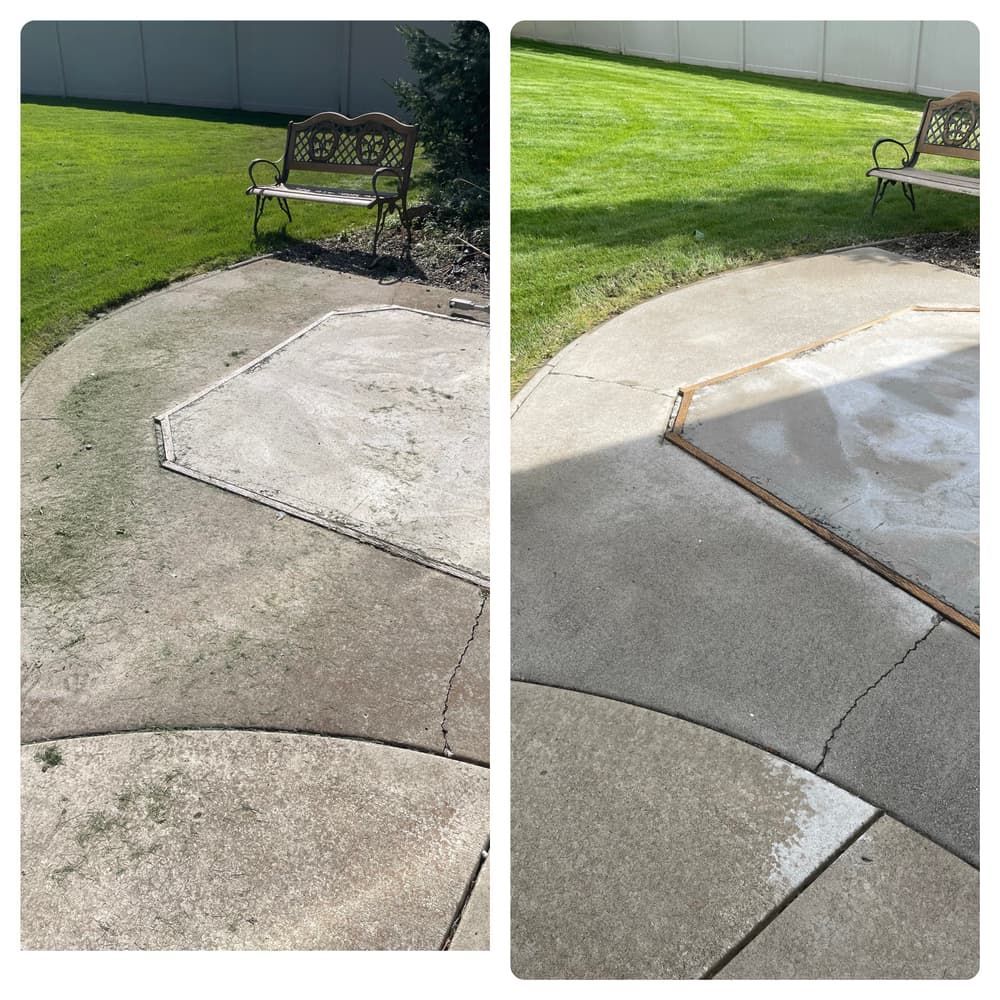
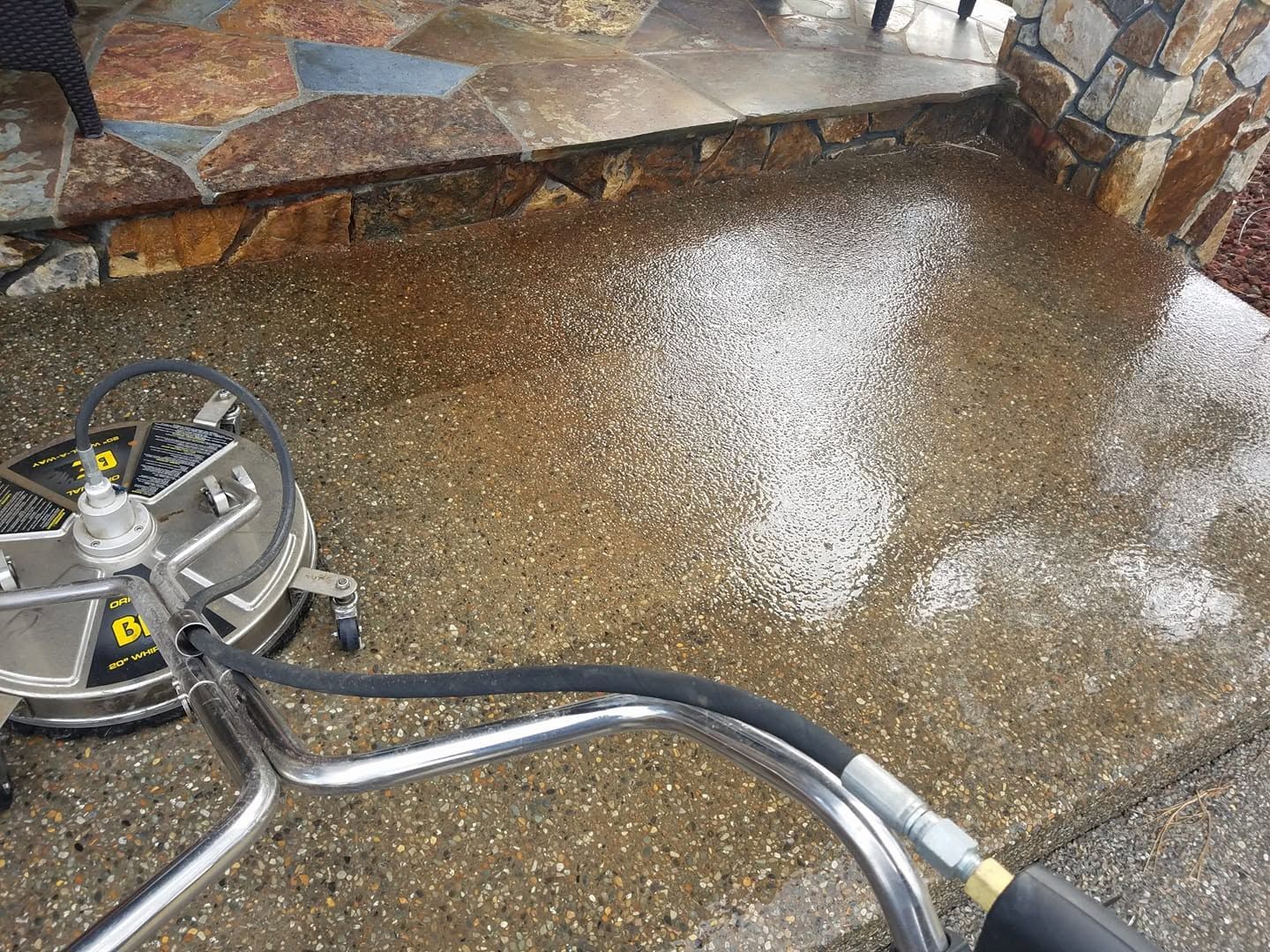
Anyone can point a wand at concrete, and most rental machines get pointed at it every weekend in spring. Doing it without leaving stripes takes a rotary surface cleaner, a consistent overhead speed, and an operator who overlaps every single pass. Wand cleaning belongs on edges, steps, and corners, where the surface cleaner physically cannot reach.
Stains get treated before the rinse, not scrubbed at afterward. Organic growth, rust, and tire rubber each answer to different chemistry, and applying it in the right order is what separates an even slab from a patchy one.
- Rotary surface cleaner on all flat work
- Pre-treatment matched to the stain
- Edges, steps, and joints detailed by hand
- Post-rinse so nothing dries back on
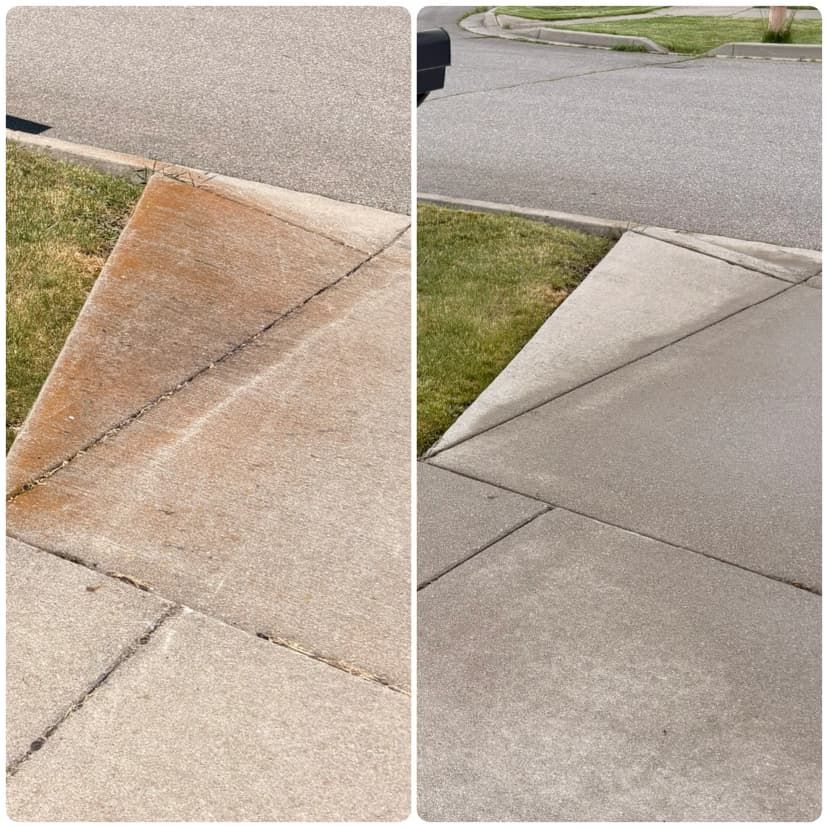
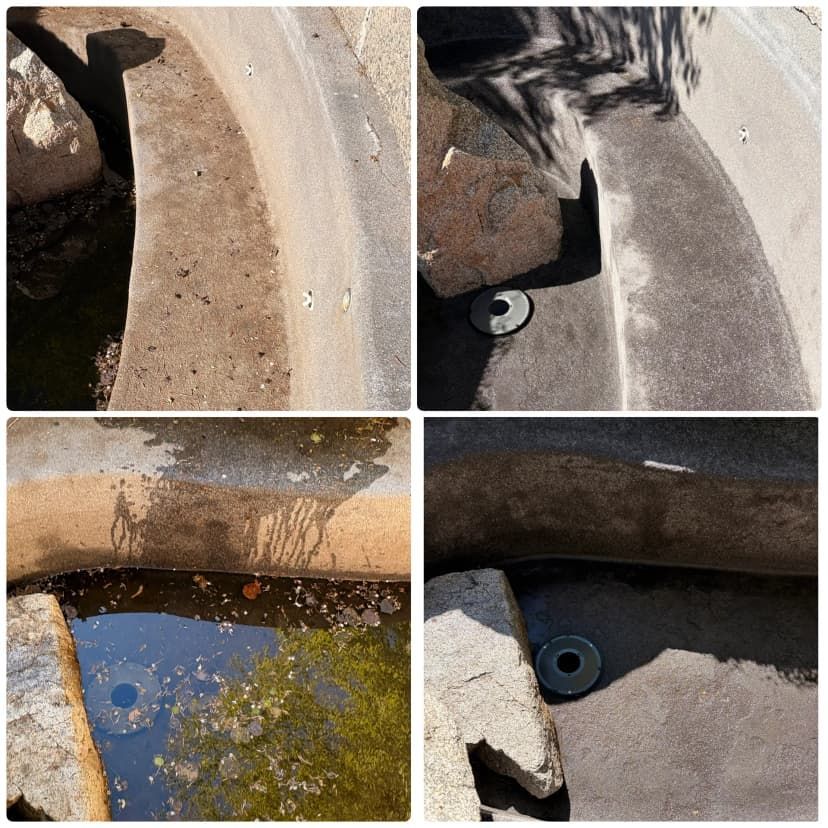
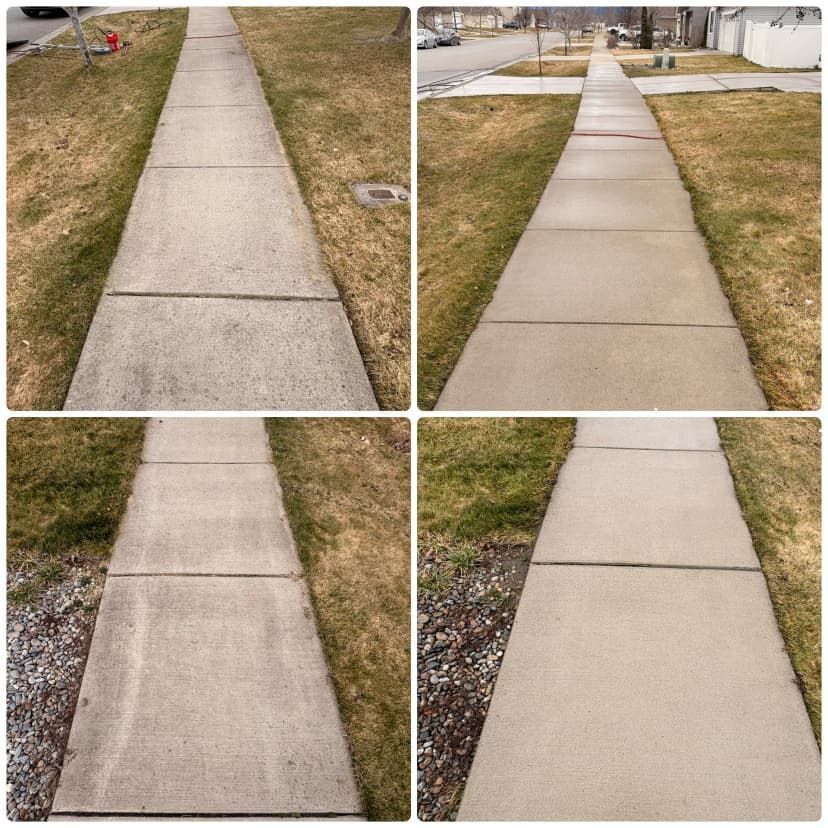
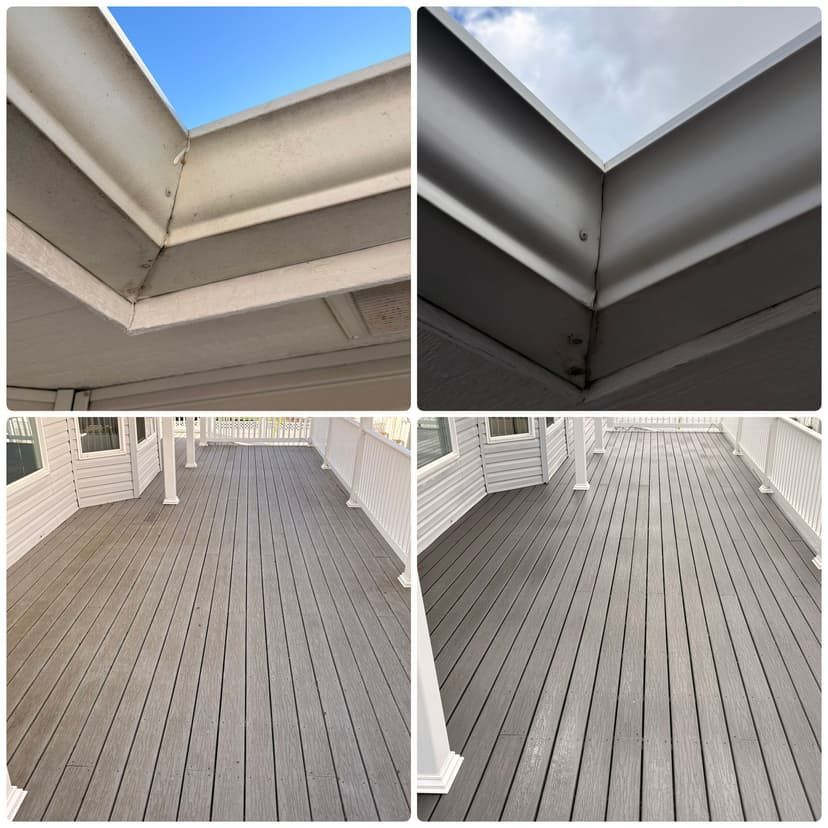
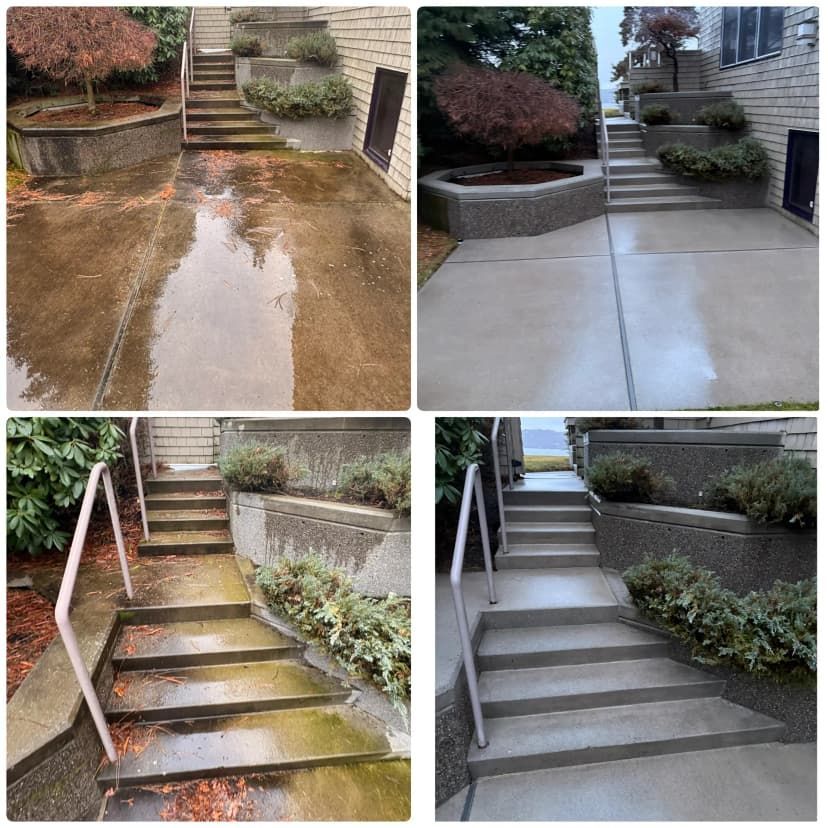
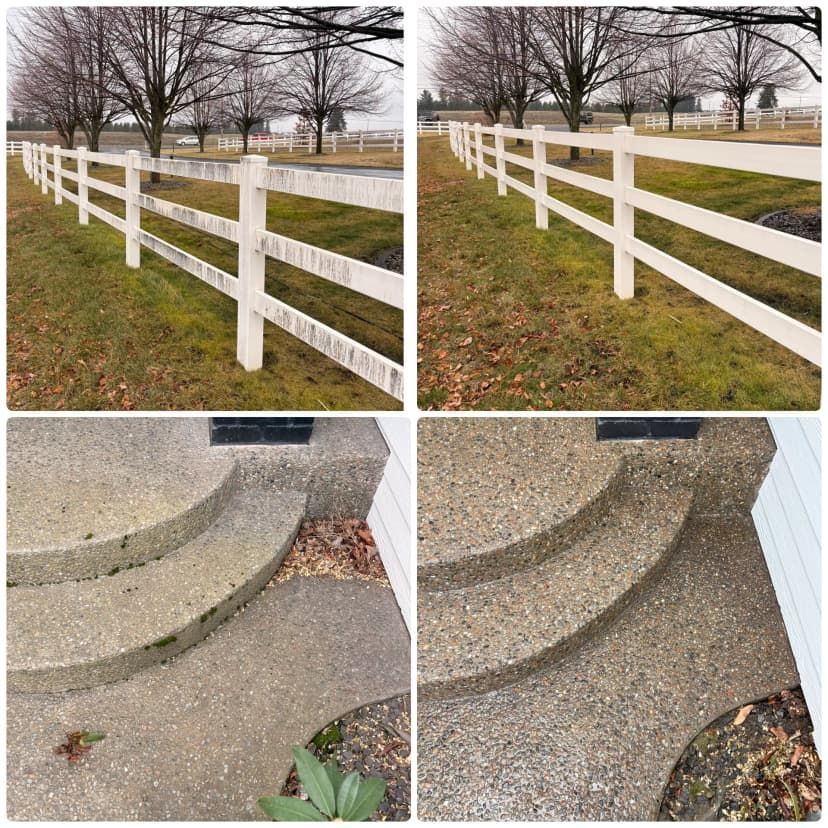
CONCRETE CLEANING
YOUR DRIVEWAY IS POROUS, AND WINTER KNOWS IT.
Concrete looks solid and behaves like a sponge. Meltwater carrying road salt soaks in, freezes, expands, and works the surface apart from inside. Every layer of algae, moss, and organic film on top slows drying and keeps the slab saturated longer than it should be. Cleaning does more than brighten a driveway. It removes what holds the water, which is the single cheapest thing a property owner can do about spalling.
POST FALLS SLABS TAKE A LONGER BEATING THAN MOST.
First frost usually lands between October 11 and 20 here, and the last one falls between May 1 and 10. That is a seven-month window of repeated freezing and thawing, layered over roughly 59 inches of annual snowfall each year. Slabs beside a shaded fence line or under conifers stay damp between events. Those green up first and spall first, and they are the ones we recommend cleaning yearly.
ROAD SALT IS THE ENEMY WE PLAN AROUND.
Local slabs tell a consistent story once you have cleaned enough of them. Orange-brown organic staining shows up on the north side. Tire scuff concentrates in the turnaround. The apron nearest the street carries the heaviest chloride load, and it is the section homeowners forget to mention. 8+ years of cleaning slabs through Post Falls winters tells us where the chloride sits heaviest before we ever unroll a hose. Knowing where damage collects lets us pre-treat the right zones instead of running the machine longer and hoping. What does your apron look like this year?
WHY CHOOSE US FOR CONCRETE CLEANING.
EVEN, NOT STRIPED
Surface cleaners cover flat work at a consistent speed with overlapping passes. You get one uniform gray, not the zebra striping a hand-held wand leaves behind on a wide slab.
SALT FILM LIFTED
Winter deicer leaves a residue that keeps working long after the snow is gone. Removing it each spring is straightforward maintenance that protects the surface you already paid to pour.
SAFER FOOTING
Algae and moss make concrete slick the moment it gets wet. Clearing it off a walkway, a pool deck, or a set of stairs is a liability fix as much as a cosmetic one.
REALISTIC OUTCOMES
We assess the slab and tell you which stains will lift and which will not before quoting. Deeply absorbed oil and rust sometimes leave a shadow, and you hear that first.
DETAIL AT THE EDGES
The line where concrete meets grass, gravel, or a foundation is where sloppy work shows. Those edges, along with steps, joints, and corners, are finished by hand every time.
RUNOFF HANDLED
Rinse water is directed away from storm drains wherever detergents are used, in line with local stormwater requirements. Your slab gets clean without creating a problem downstream.
WHAT WE CLEAN
OUR CONCRETE CLEANING WORK
Flatwork is not one surface. A broom-finished driveway, a stamped patio, a sealed garage floor, and a pool deck each behave differently under pressure, so each gets its own approach on the same visit.
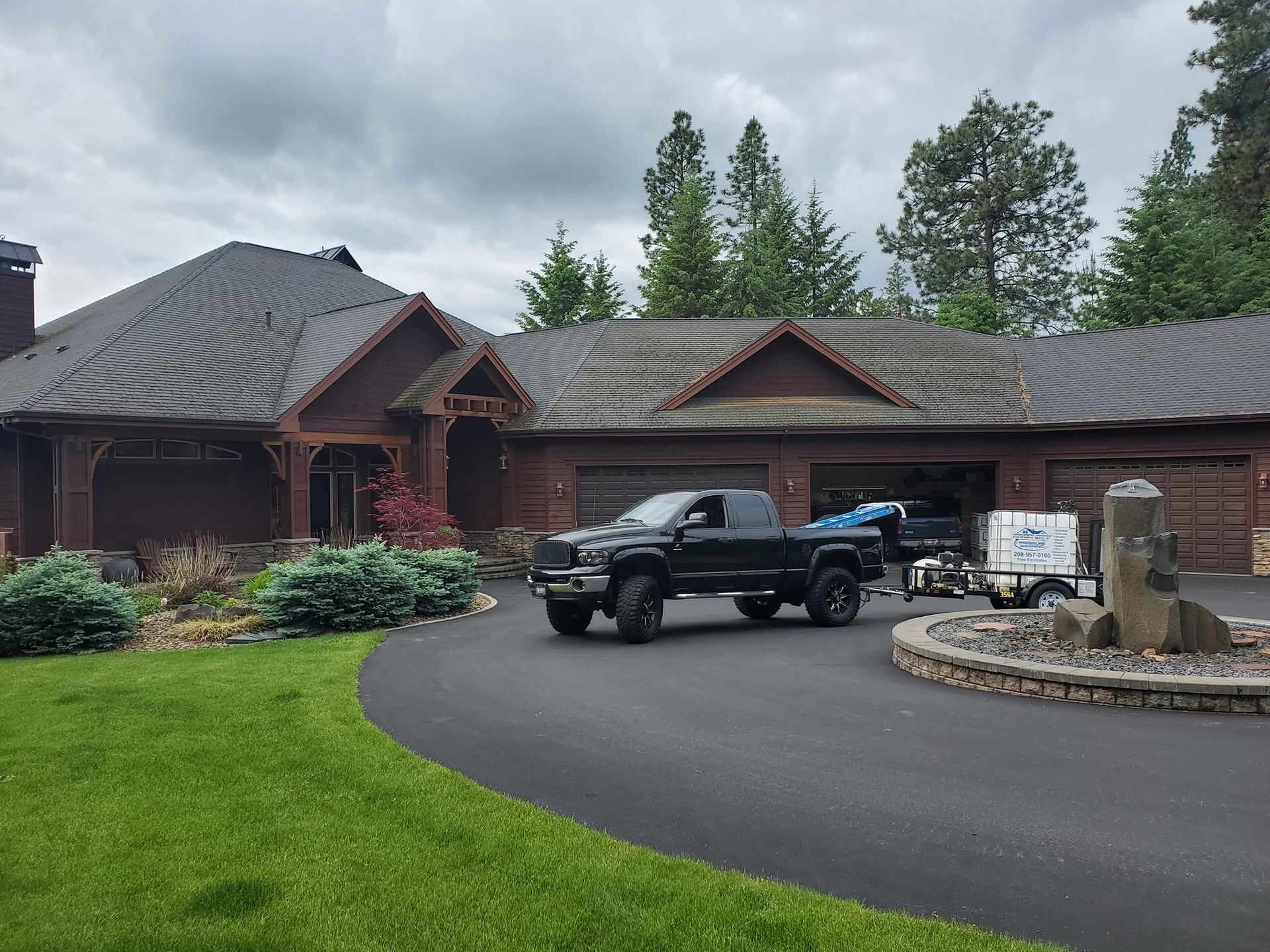
DRIVEWAYS
Driveway and Apron Cleaning
The largest slab on most properties, and the one collecting road salt, tire rubber, and drip stains all winter. Surface cleaning covers the field evenly, and the street apron gets extra attention where chloride sits heaviest.
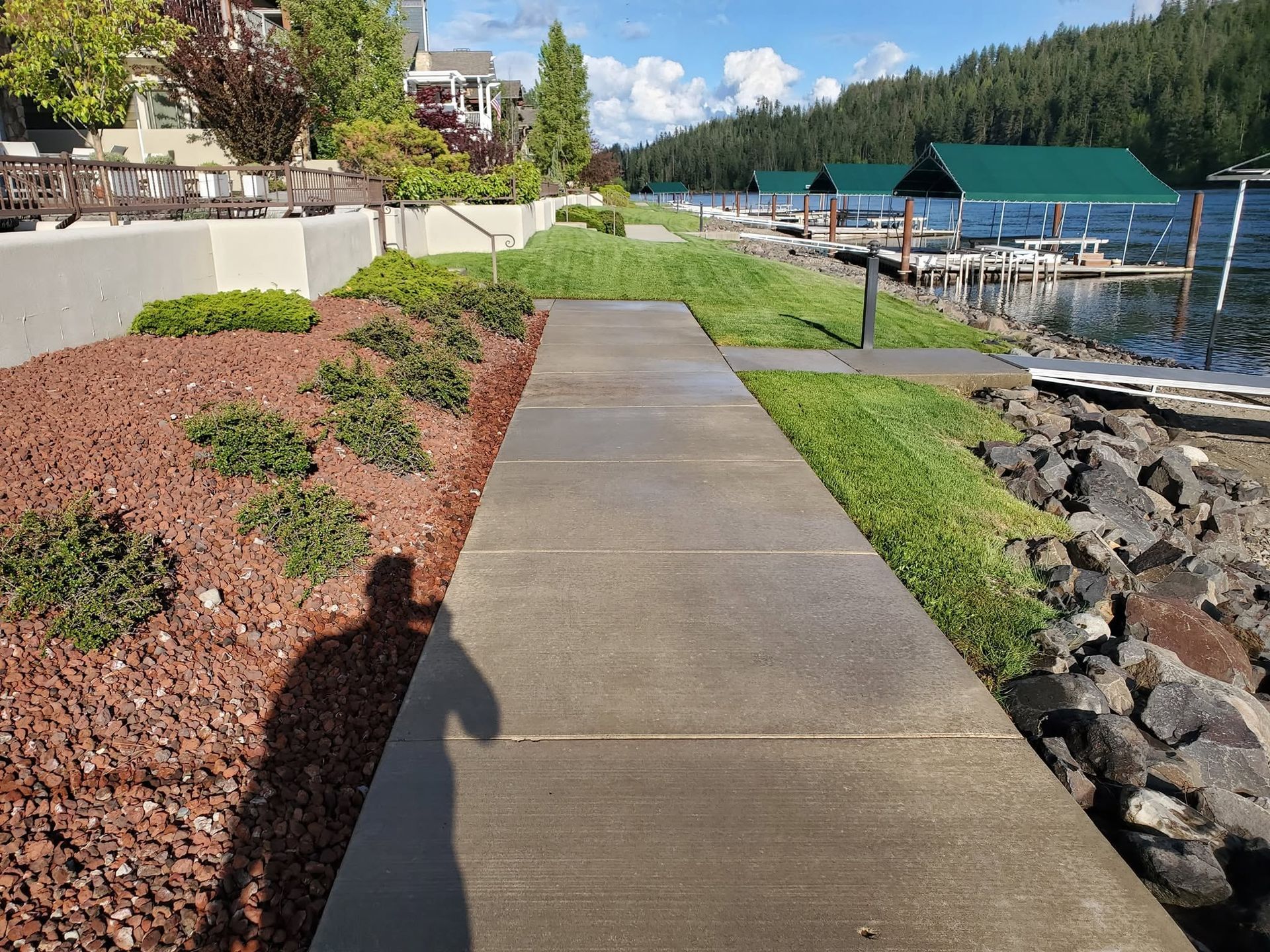
WALKWAYS
Sidewalks and Entry Paths
Narrow runs pick up organic growth fastest because they stay shaded and rarely dry fully. Cleaning restores traction underfoot and sharpens the approach to a front door more than almost any other exterior job.
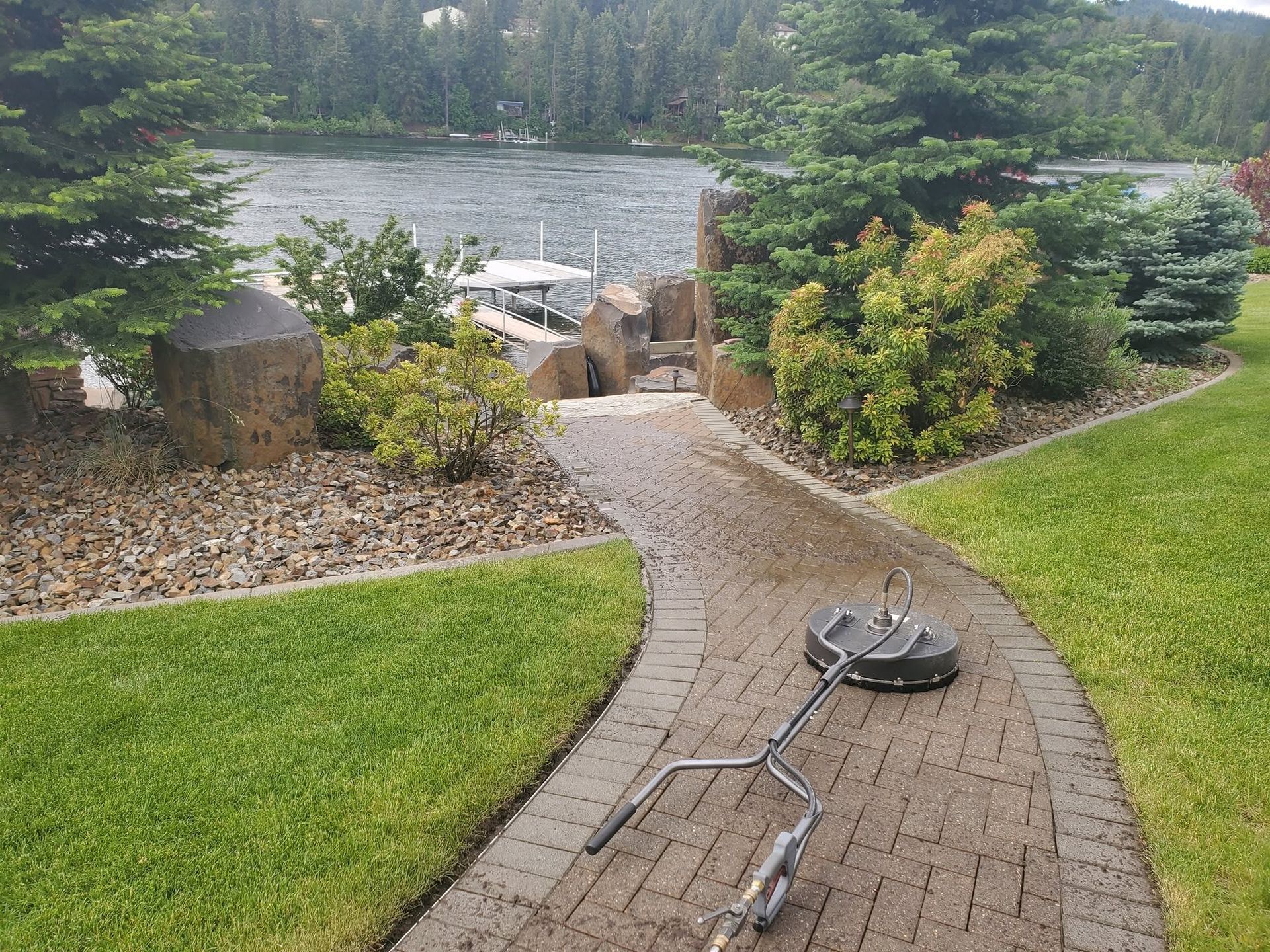
PATIOS
Patios and Paver Cleaning
Slabs, stamped concrete, and paver sets lose the moss packed into joints and the green film that makes them slick. Heavily grown paver joints often want fresh sand once the surface has fully dried out.
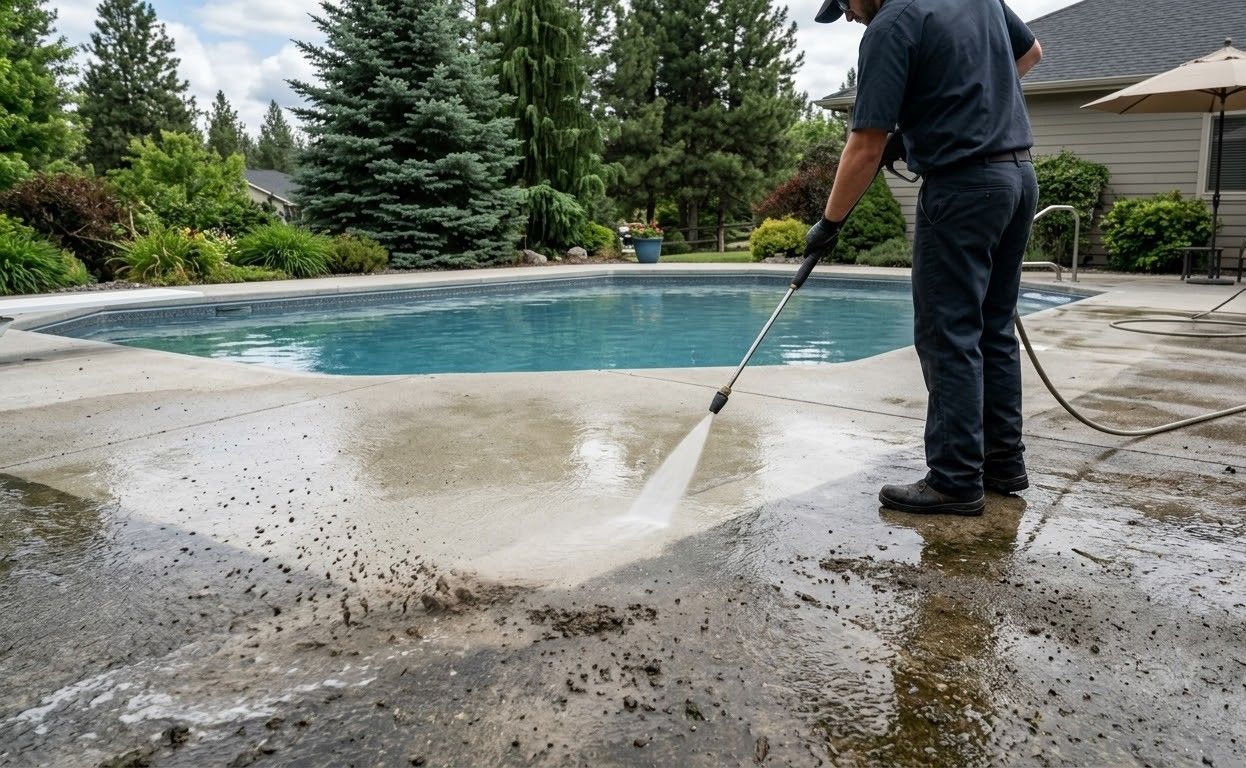
POOLSIDE
Pool Decks and Surrounds
Wet traffic, sunscreen residue, and shaded edges leave pool surrounds slicker than they look. Cleaning is worked so nothing rinses into the water, and textured decking keeps its grip rather than being polished smooth.
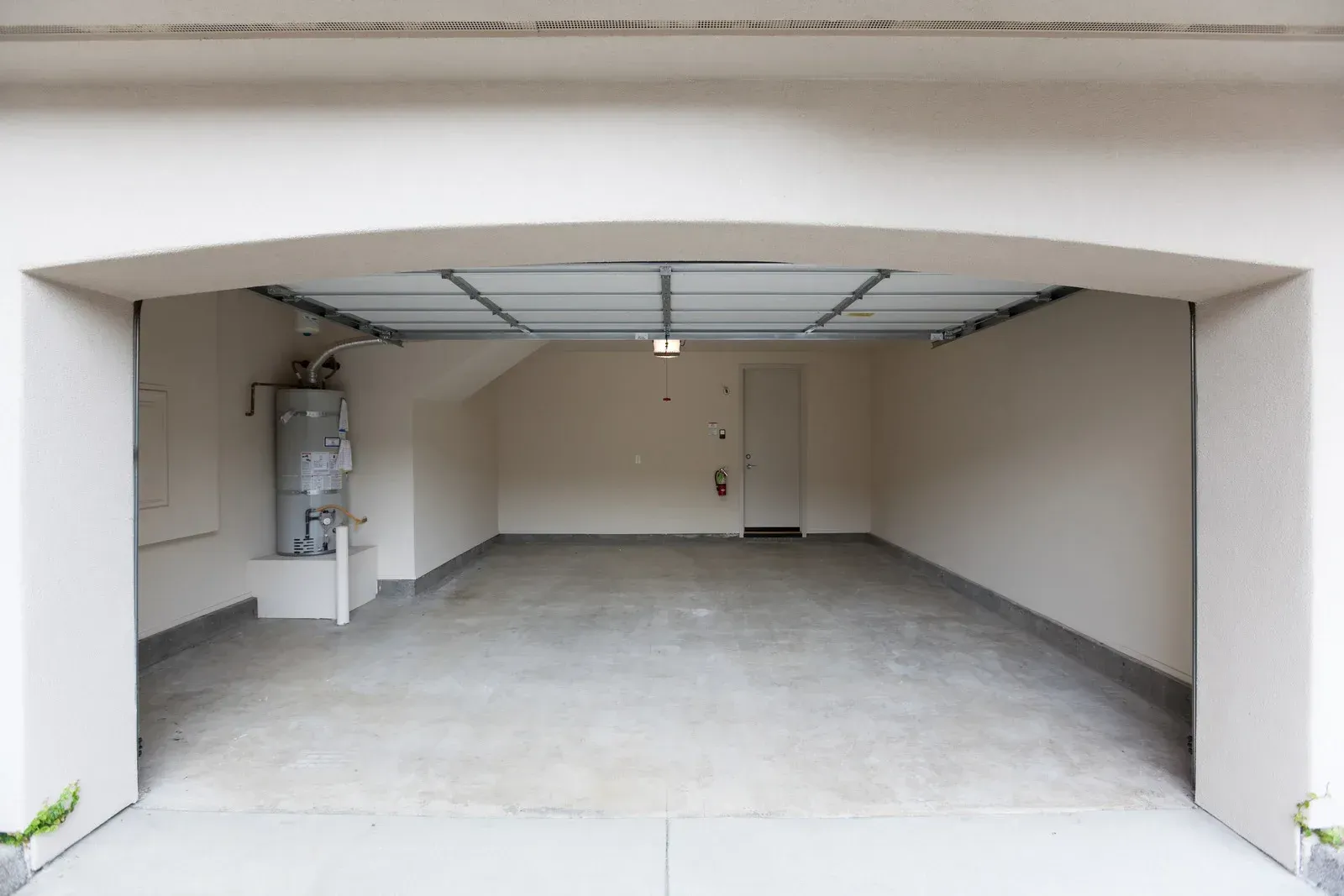
GARAGE
Garage and Shop Floors
Drips, dust, and tracked-in slush build a gray film that hides cracks and leaks. A cleaned floor makes maintenance issues visible again and stops grit migrating into the house on shoes and tires.
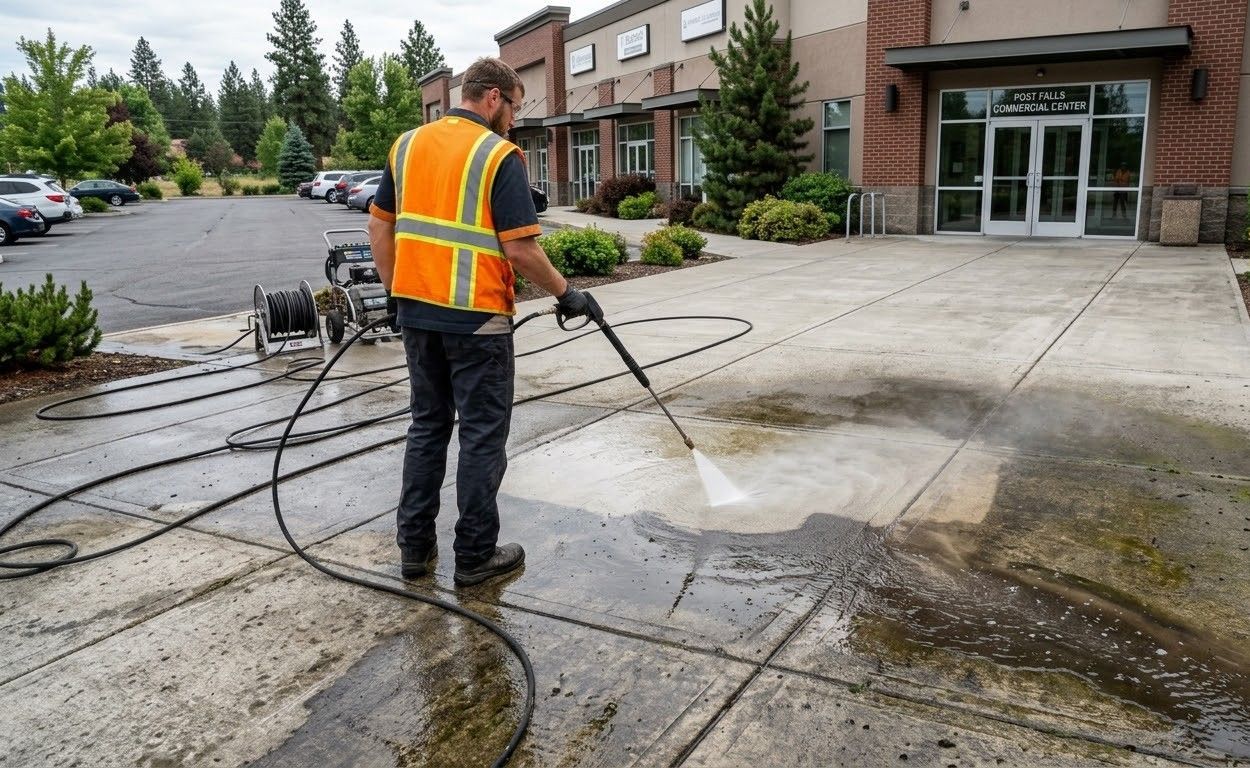
COMMERCIAL FLAT
Business Walkways and Pads
Storefront entries, sidewalks, loading areas, and dumpster pads take heavy foot and wheel traffic. These are scheduled around opening hours so nothing wet sits where customers or staff need to walk.
THE WORD ON OUR WORK
WHAT OUR CLIENTS SAY.
The line we hear most about concrete is that people forgot what color it used to be. Reviews mention the evenness more than the brightness, which tells us the surface cleaner is doing its job, and several note the apron looked better than it had in years.
Common Questions
FREQUENTLY ASKED QUESTIONS.
Concrete raises more questions than any other surface we clean, mostly about damage and stains. Here is what we tell people standing on their own driveway.
Will pressure washing damage my concrete driveway or sidewalk?
Not at the correct pressure. Concrete handles 2,500 to 4,000 PSI comfortably. Damage comes from holding a narrow tip too close or too long in one spot, which a surface cleaner moving at a steady pace avoids.
Can you remove rust stains from concrete?
Often, though it depends on how deep the iron has traveled. Fresh irrigation rust usually clears with the right treatment. Older staining under a sprinkler head or a planter may lighten considerably rather than disappear entirely.
Can you get oil stains out of a driveway?
Fresh oil responds well to degreaser and hot rinsing. Anything soaked in for years has penetrated the pores and typically leaves a shadow. We look at the spot and give you an honest read before quoting the work.
Should I seal my driveway after cleaning?
Sealing after a clean is reasonable in a freeze-thaw climate, because it slows water absorption. The slab has to be fully dry first, and the product needs to suit the finish, so it is a separate decision from cleaning.
Why does my concrete keep getting those dark lines back?
Shade and moisture. A slab that never dries regrows organic film quickly. Around Post Falls, ID, River City Pressure Washing sees it worst along fence lines and under conifers, so trimming branches and correcting sprinkler overspray extends results noticeably.
How often should a driveway be cleaned in this climate?
Once a year suits most properties in Post Falls, ID, ideally in spring once deicer season ends. River City Pressure Washing cleans shaded slabs and heavily used commercial flatwork more often, since growth returns faster on both.
Can you clean stamped or colored concrete safely?
Yes, with reduced pressure and a wider fan, since decorative surfaces and their sealers are softer than a broom finish. We test an inconspicuous section first and adjust before committing to the visible field.
Do I need to move my vehicles before you arrive?
Yes, please. Cars, trailers, and anything on wheels need to be off the slab so the surface cleaner can run edge to edge. Patio furniture and planters should come off patios for the same reason.
HOW WE WORK
FROM STAINED SLAB TO EVEN GRAY, HERE IS HOW.
STEP 01
Read the Concrete
We walk the flatwork, identify the finish, note cracks, spalling, and sealer, and separate organic staining from oil, rust, and rubber. Each of those needs different chemistry, and the assessment decides what gets applied where.
STEP 02
Price It Plainly
You get a written figure covering square footage, access, and pre-treatment, with a clear note on any stain we expect will not fully lift. Knowing that in advance beats being disappointed afterward. The number you agree to is the number you pay.
STEP 03
Pre-Treat the Stains
Targeted product goes down on organic growth, rust, and tire marks and is given time to work. This is the step most people skip, and it is why their slab comes out cleaner in some places than others.
STEP 04
Run the Surface Cleaner
The rotary head covers the flat field at a steady pace with overlapping passes, so pressure lands uniformly. No striping, no missed strips, no dwelling in one place long enough to etch the finish.
STEP 05
Detail Every Edge
Perimeters, expansion joints, steps, corners, and the transition to grass or gravel get finished by hand. This is the part that separates a professional job from a rented machine on a Saturday. It is slow, and it is what you are paying for.
STEP 06
Rinse and Inspect
Everything gets a final rinse so nothing dries back onto the surface, runoff is directed away from drains, and we walk the slab with you while it is still wet enough to show the truth.
Get Your Free Estimate
FIND OUT WHAT COLOR YOUR CONCRETE WAS, FREE.
Send your address through the contact form and we will measure the flatwork, look at the staining, and price it in writing. You will know which marks are leaving and which are staying before anyone starts.
WHAT YOUR CONCRETE QUOTE COVERS:
- Written estimate with square footage
- Stain assessment and honest expectations
- Pre-treatment before any washing
- Surface cleaner on all flat areas
- Hand detailing at edges and steps
- Our 100% satisfaction guarantee