Fence Cleaning
FENCE CLEANING IN Post Falls, ID
Wood fencing takes 500 to 1,500 PSI, and past that the fan tip starts tearing grain and raising fibers that never lie flat again. That single number explains most of the ruined fences in the valley, because rental machines start well above it. River City Pressure Washing cleans wood, vinyl, and metal fence panels across Post Falls, ID at pressure matched to the material, working both faces so the neighbor's side looks the same as yours does.
A FENCE FAILS FROM THE BOTTOM UP.
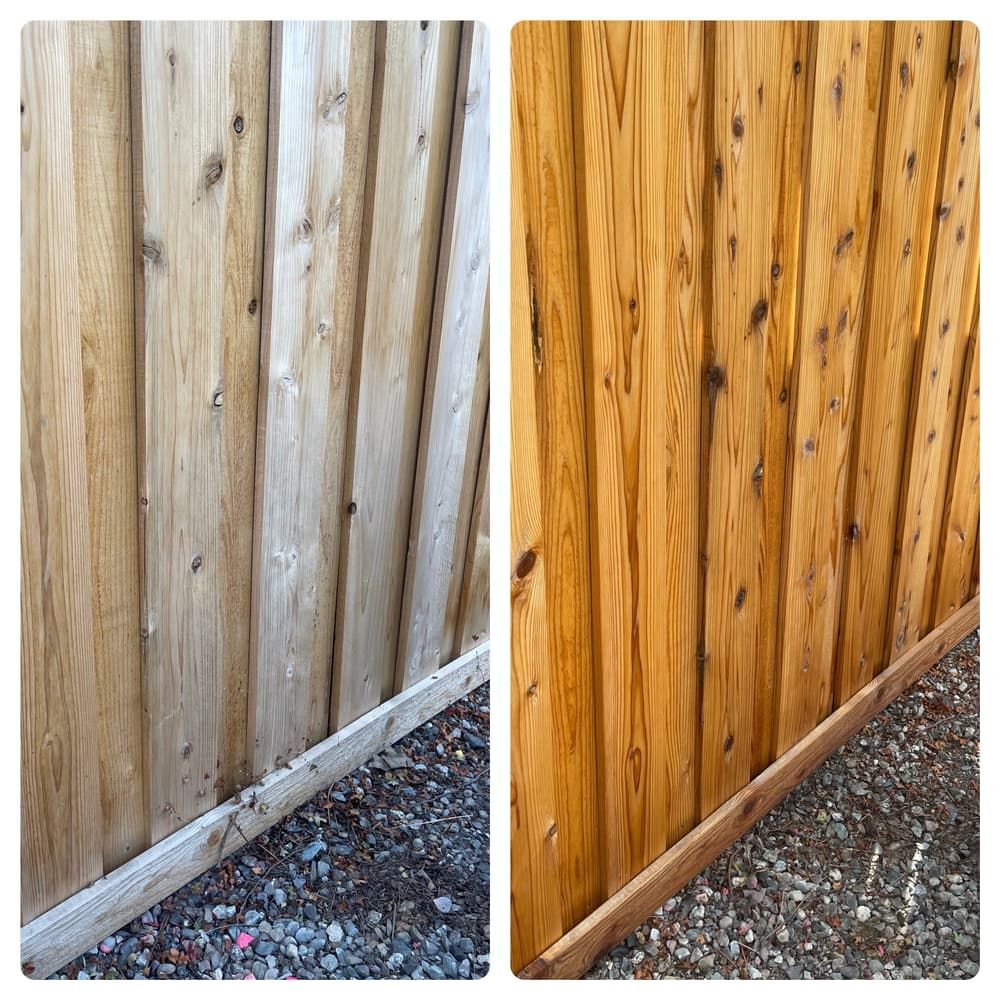
The first eight inches of any picket live in a permanent moisture problem, and that is where every fence in this valley begins to give up. Sprinkler spray, ground splash, and plowed snow piled against the boards keep that band damp long after the rest of the run has dried out, which is why rot, green staining, and soft grain always start there.
Cleaning removes what holds that moisture. It also uncovers the panels that are already past saving, which is better learned in September than discovered when a section falls over in February.
- Pressure matched to wood, vinyl, or metal
- Both faces of every panel cleaned
- Ground splash line worked deliberately
- Failing boards and posts pointed out
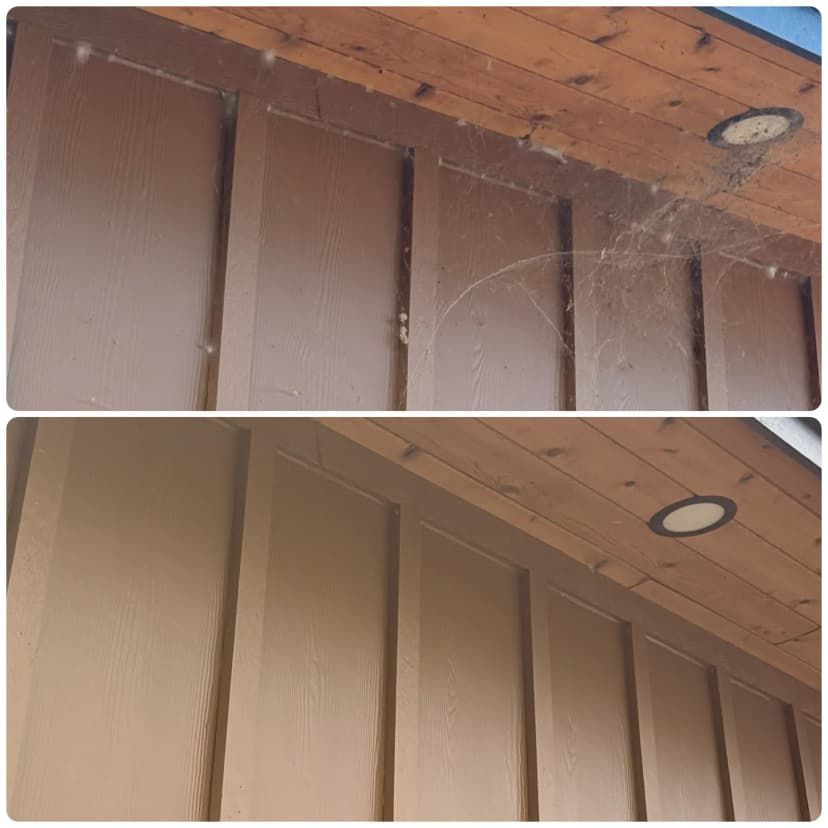
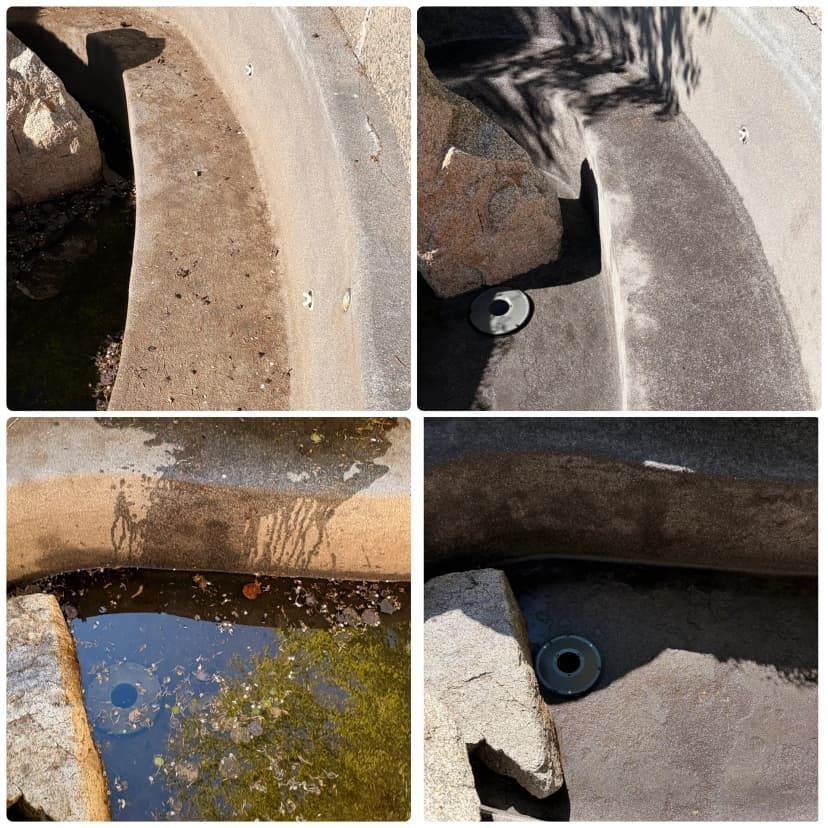
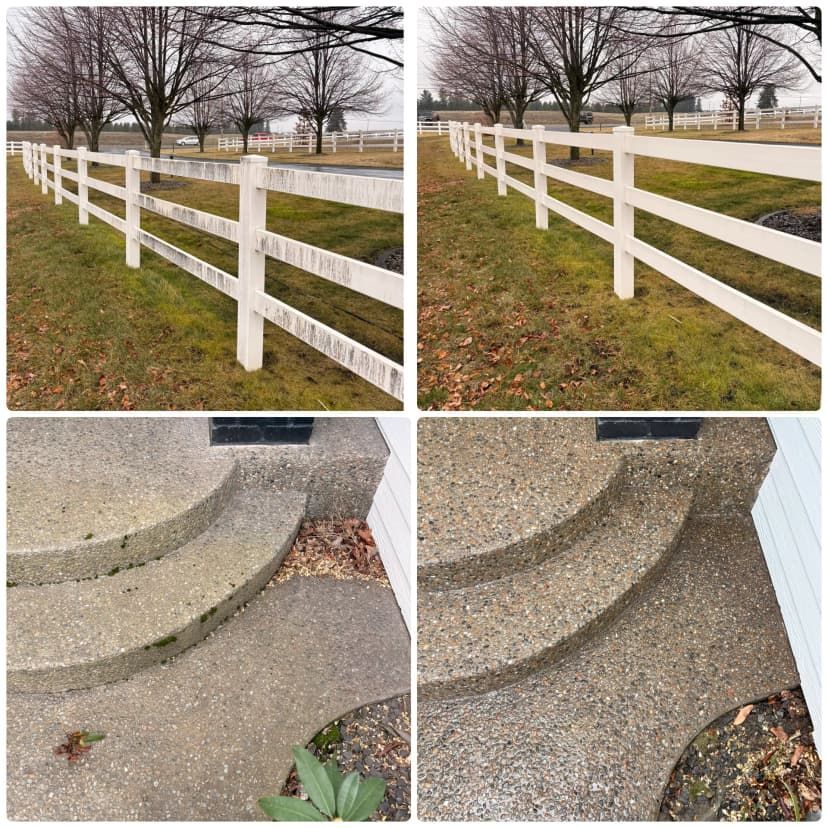
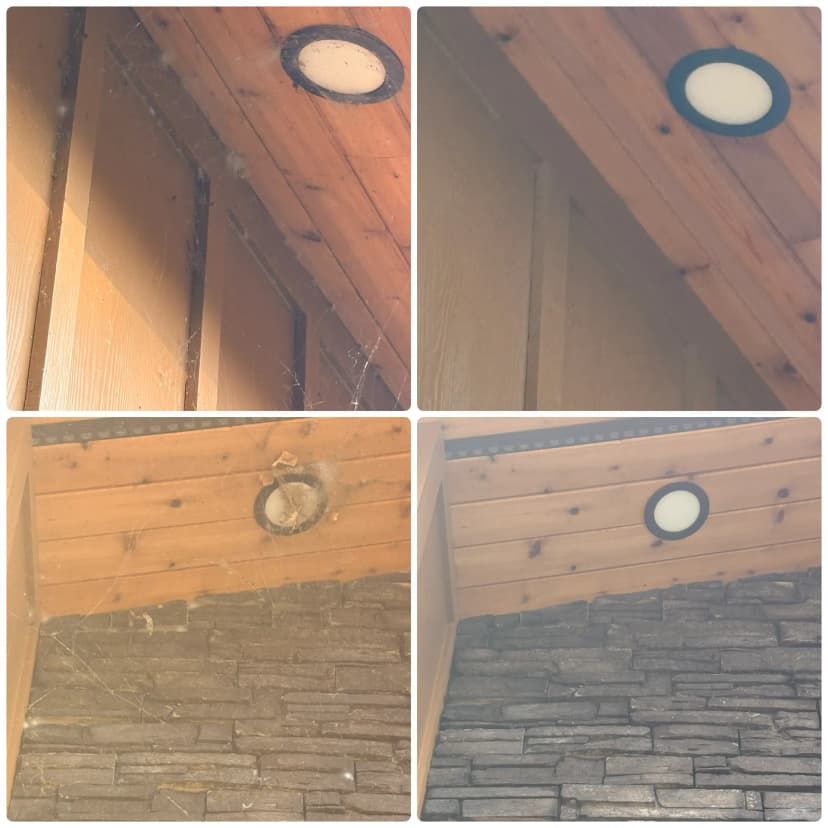
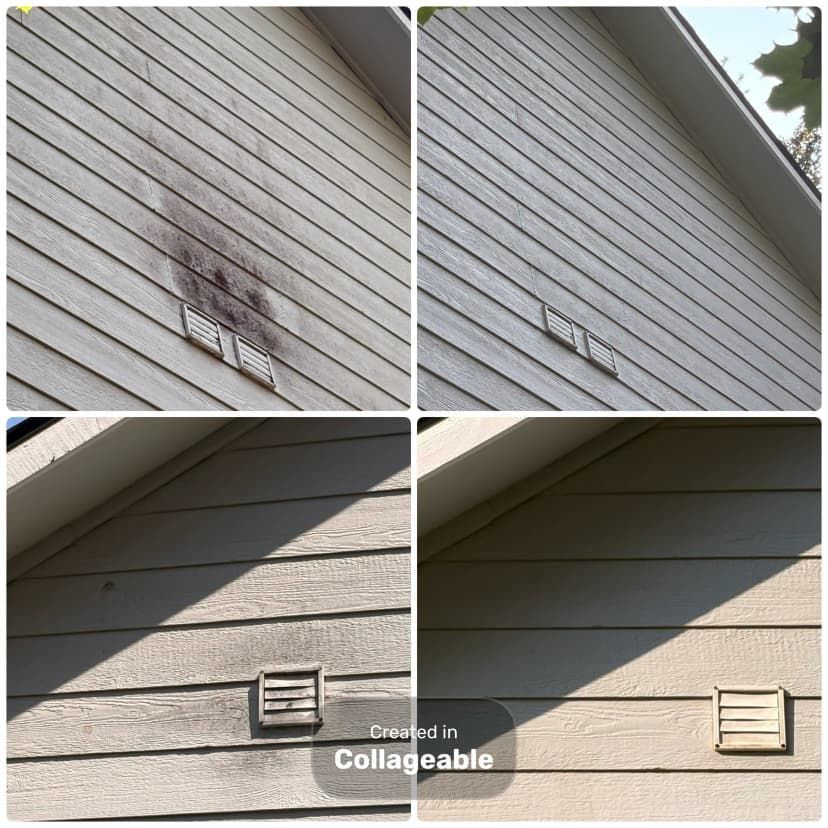
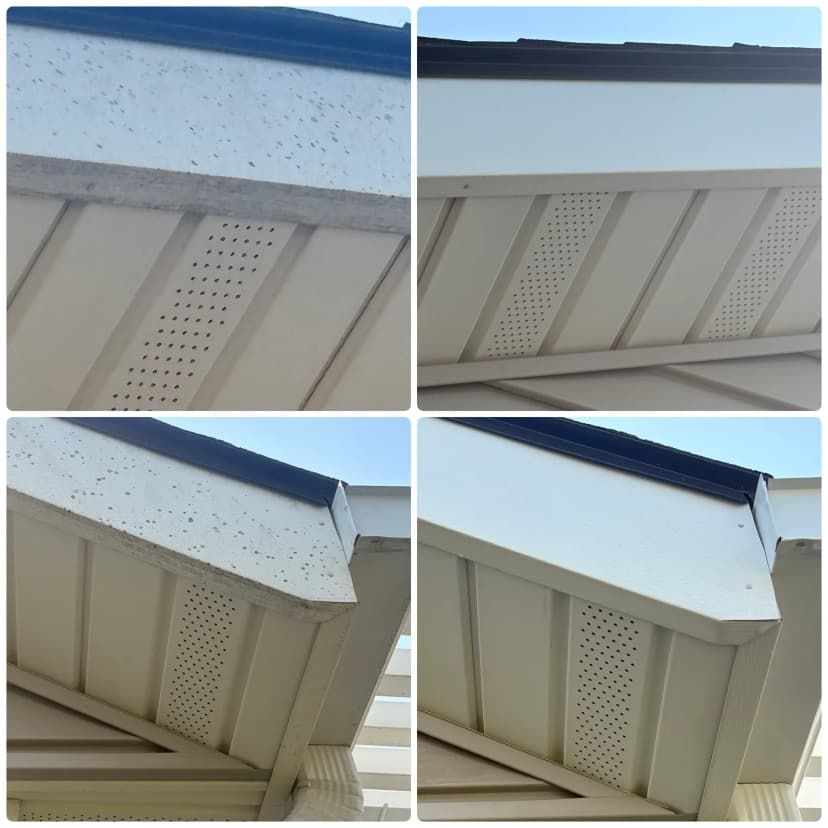
FENCE CLEANING
YOUR FENCE IS THE LONGEST SURFACE ON THE PROPERTY.
Nobody thinks of a fence as a large exterior surface until it is dirty, and then it is the only thing they see. A standard back yard run carries more square footage than a whole wall of the house and frames every photograph taken in the yard. It also ages faster than siding, because it has no eave over it and no dry side. Cleaning it is the highest-visibility hour we spend on most properties.
SHADE, SPRINKLERS, AND SNOW PILES DO THE DAMAGE HERE.
North Idaho stacks the conditions a fence hates. Irrigation hits the same boards every morning through summer, conifer shade keeps whole runs from drying, and plowed or shoveled snow gets piled against panels for months. The green streaking along a Post Falls property line is not dirt sitting on the surface. It is living growth in the grain, and it returns quickly unless it is treated rather than blasted.
YOUR WORST PANEL IS OUR FAVORITE PART.
8+ years of cleaning property lines here, and we can usually tell which boards are finished before the wand comes off the trailer. Every fence has one section that looks beyond help, usually behind a shrub or at the low corner where water collects. Those are the panels that show what cleaning can actually do, and they are also where honesty matters, because some of them are structurally finished regardless of how they look. We will clean what will come back and tell you plainly which boards are done. Which section of yours are you avoiding looking at?
WHY CHOOSE US FOR FENCE CLEANING.
GRAIN STAYS INTACT
Correct pressure lifts growth without raising or splintering the wood fibers. A fence cleaned too hard looks bright for a week, then weathers faster than it did before anyone touched it.
BOTH SIDES DONE
Fences have two faces, and a neighbor sees one of them daily. Cleaning only your side leaves half the run stained, which is obvious from the street and from every adjoining yard.
READY FOR STAIN
Stain cannot penetrate through growth, weathered fibers, or a failing old coating. A proper clean is the prep step that decides whether the finish lasts two seasons or six.
VINYL BRIGHTENS BACK
White vinyl that has gone dull green or streaky returns to white without the chalking or cracking that high pressure causes. Panels come out uniform rather than patchy along the run.
THE SPLASH LINE
The bottom band where sprinklers and ground water hit is worked deliberately, not skipped because it is awkward. That is where staining is worst and where damage starts if it is ignored.
AN HONEST CONDITION READ
Soft posts, loose rails, popped fasteners, and boards past saving are pointed out before we clean, not after. You get useful information about the fence rather than a sales pitch.
WHAT WE CLEAN
OUR FENCE CLEANING WORK
Fence materials behave nothing alike under a pressure washer, and the same run often mixes two of them. Here is how each type is handled and what else gets covered along the line.
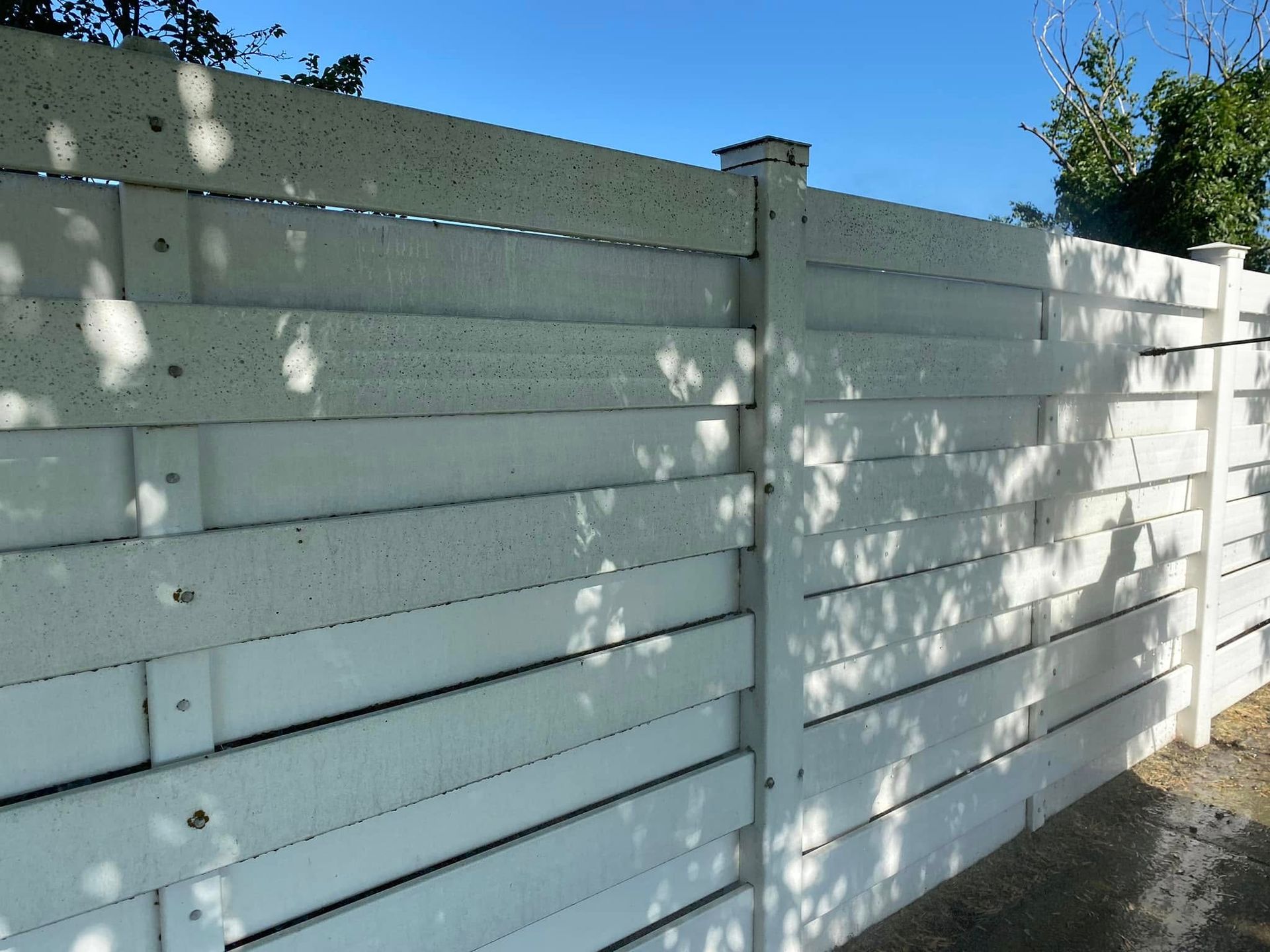
CEDAR
Wood and Cedar Fencing
Pressure stays in the safe band and the tip is kept moving so grain is never torn. Green staining, mildew, and the gray weathered layer lift together, leaving a surface ready to take stain.
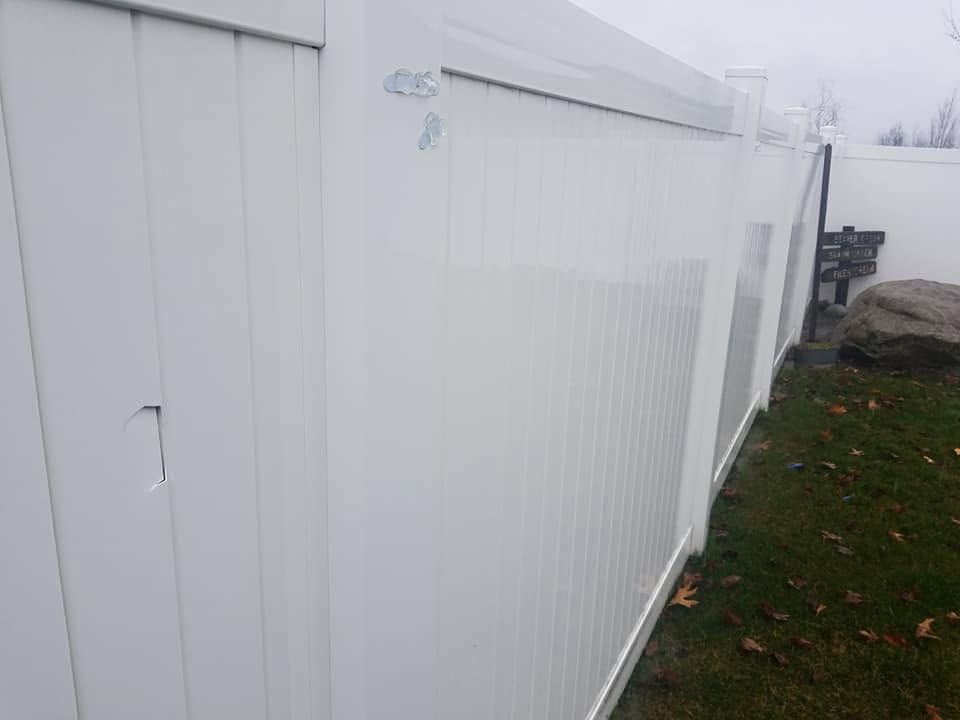
VINYL
Vinyl and PVC Panels
Dull, streaky white returns to actual white using solution rather than force, since vinyl chalks and cracks under high pressure. Rails, posts, and lattice tops get the same treatment as the flat panels.
METAL
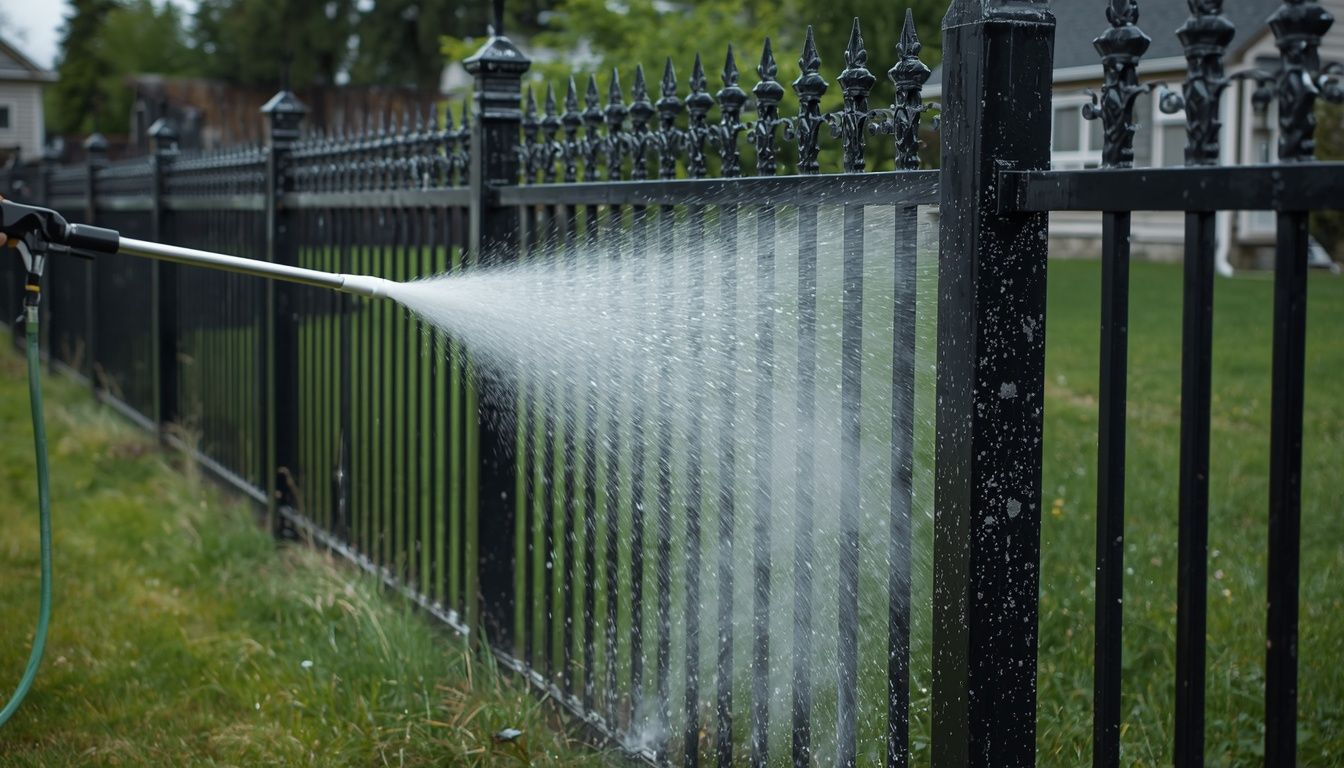
Chain Link and Ornamental Metal
Wrought iron, aluminum, and chain link lose oxidation film, cobwebs, and ground splash. Rust spots and failing coatings get flagged for you, since cleaning alone will not stop corrosion already underway.
COMPOSITE
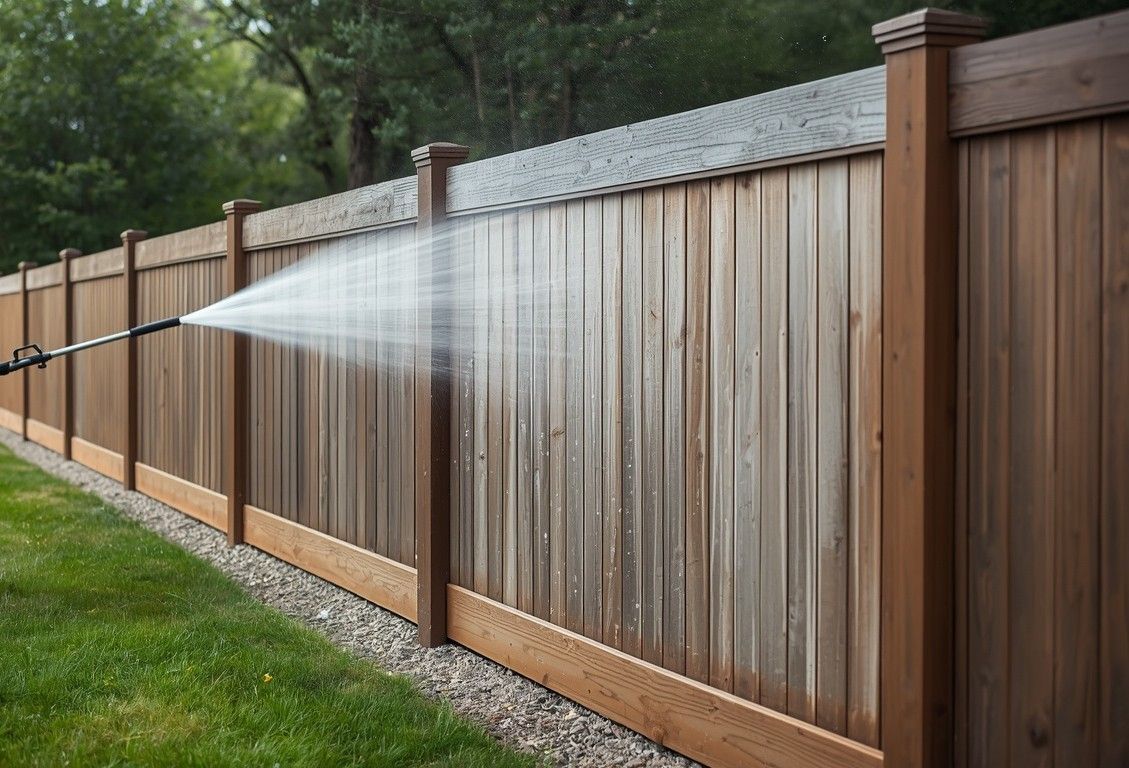
Composite and Vinyl-Clad Runs
Manufactured fencing holds a chalky film that hides its actual color completely. Low pressure with the right cleaner restores the tone across the whole run without leaving the wand marks force would.
GATES
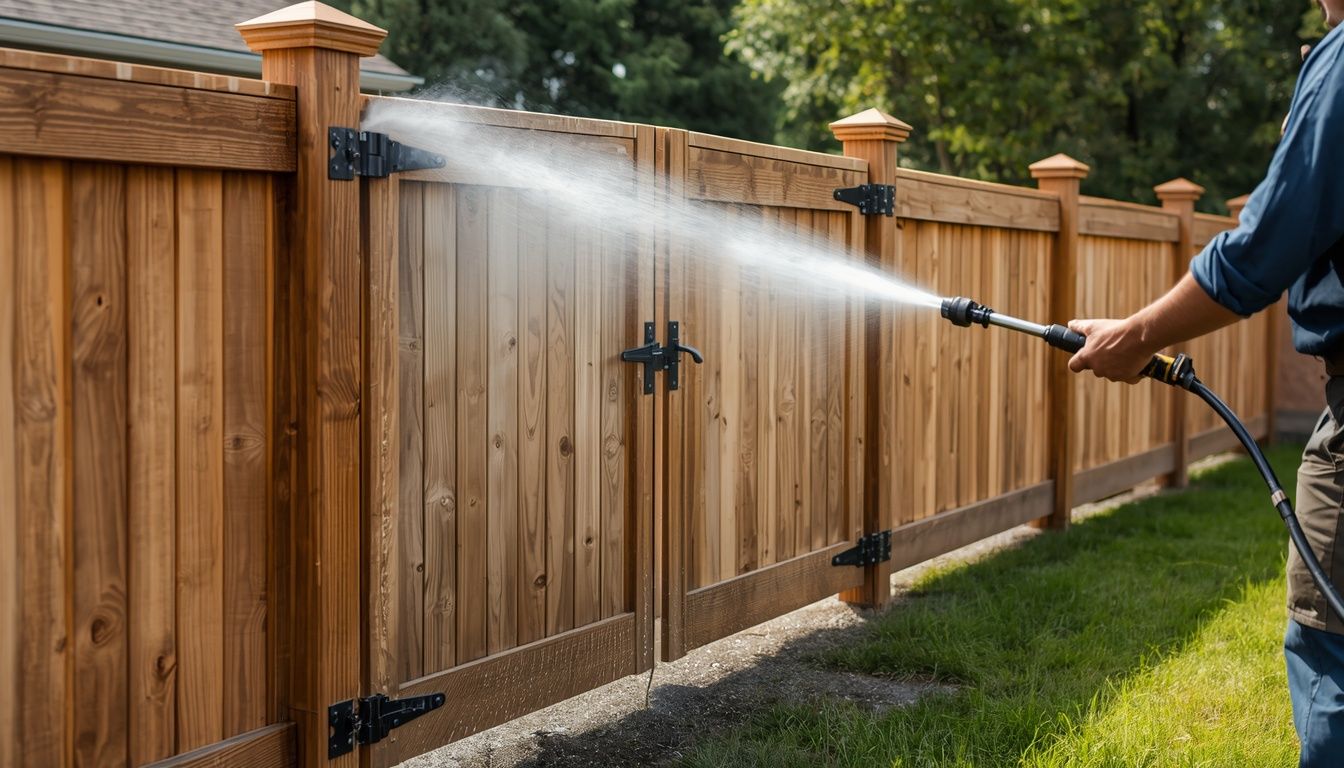
Gates, Posts, and Hardware
Gates take the most handling and show it first around the latch and hinge. Posts, caps, and hardware are cleaned with the panels so nothing along the run looks skipped or half-finished.
PERIMETER
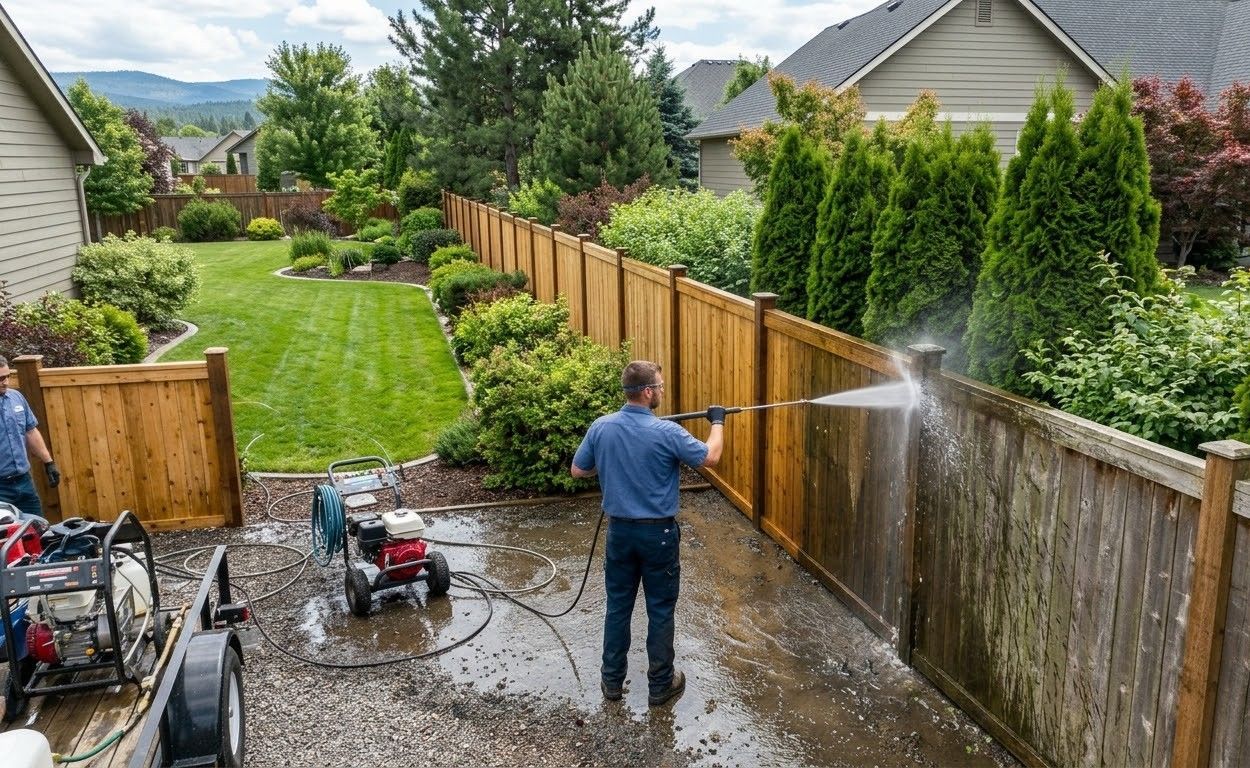
Full Property Line Service
Long runs get worked as a continuous job so tone stays even from end to end. Returns, corners, and the sections behind shrubs are included rather than quietly left for nobody to notice.
THE WORD ON OUR WORK
WHAT OUR CLIENTS SAY.
The comment that comes up most on fences is surprise at the color underneath. Several people have told us they had already priced a replacement and canceled it after seeing the run cleaned. Neighbors noticing their own side got done is the other regular remark.
Common Questions
FREQUENTLY ASKED QUESTIONS.
Fence questions are almost always about damage, about staining afterward, or about how often any of this needs repeating. Here is what we tell people standing at their own property line.
Is pressure washing safe for a wood fence?
Not at the correct setting. Wood tolerates 500 to 1,500 PSI with a moving wide tip. Damage happens when a narrow tip is held close, which tears grain and raises fibers that will not lie flat again.
Is soft washing better than pressure washing for fences?
For vinyl and painted fencing, yes, because force chalks and cracks those surfaces. Bare wood usually takes controlled pressure fine. We choose based on the material and how far the weathering has already gone.
How often should a fence be cleaned?
Once a year suits most runs here. Sections in permanent shade, along an irrigation line, or where snow gets piled against them collect growth faster and often want attention before a full year passes.
Is a vinyl fence safe to pressure wash?
Yes, and vinyl responds better to solution than to force. High pressure chalks and cracks the surface, so River City Pressure Washing cleans vinyl runs across Post Falls, ID at low pressure with a dwelling cleaner.
Will cleaning remove the gray from weathered wood?
Usually a good deal of it. Graying is oxidized surface fiber, and cleaning takes off much of that layer to reveal fresher wood beneath. Deeply weathered cedar may need light sanding for a full reset.
Do you clean the neighbor's side of the fence too?
Whenever access allows, and we ask you to arrange it beforehand. A fence cleaned on one face only looks unfinished from every other vantage point, and the untreated side regrows faster.
Can mold and algae be removed permanently?
Not permanently, since spores return with the next damp season. A treated clean kills what is there at the root, which buys considerably longer than a rinse that only strips the visible surface.
Do I need to prepare the yard beforehand?
Move furniture, planters, and anything leaning on the fence away from the run, and trim back shrubs pressing against panels. River City Pressure Washing handles covering beds along the line in Post Falls, ID.
HOW WE WORK
FROM GREEN PANELS TO A CLEAN LINE, HERE IS HOW.
STEP 01
Walk the Line
We follow the entire run, note material changes, check posts and rails for movement, and identify boards already past saving. Access on the neighboring side gets settled here rather than on the day.
STEP 02
Quote by the Foot
You get a written price based on linear footage, material, number of faces, and condition. Anything we expect will not clean up fully is called out in the quote so there are no surprises.
STEP 03
Protect the Beds
Plantings along the run get soaked before we start and covered where they sit directly under the work. Furniture and anything leaning against panels is moved well clear of the line. Anything growing along the line is accounted for first.
STEP 04
Treat and Dwell
Solution goes on and is given time to break organic growth down at the root. This is what makes the result last, and skipping it is why a rinsed fence greens up again within one season.
STEP 05
Clean at Safe Pressure
The wand stays moving at the pressure the material can take, worked panel by panel with consistent overlap so the tone stays even. The bottom splash band gets deliberate attention rather than a quick pass on the way through.
STEP 06
Rinse and Review
Beds get rinsed again, debris is cleared from the base, and we walk the full run with you. If a panel needs another pass it happens on the spot, and staining timelines get discussed if you want.
Get Your Free Estimate
FIND OUT WHETHER YOUR FENCE NEEDS REPLACING, FREE.
Most fences people plan to tear out only need cleaning. Send your property line details through the contact form and we will walk it, price the run in writing, and tell you honestly which boards are finished.
WHAT YOUR FENCE QUOTE COVERS:
- Written estimate by linear footage
- Pressure matched to your fence material
- Both faces cleaned where access allows
- Splash line and gates included
- An honest read on failing boards
- Our 100% satisfaction guarantee