Heavy Equipment Washing
HEAVY EQUIPMENT WASHING IN Post Falls, ID
EPA figures put what comes off a single vehicle and equipment fleet each year at 190 gallons of oils and grease, 3,000 pounds of solids, and 2,200 pounds of surfactants. That is the material sitting on your machines, and where it ends up matters. River City Pressure Washing washes excavators, dozers, tractors, harvesters, and industrial equipment on site across Post Falls, ID, working carefully around known leaks, electrical points, and open hydraulics rather than straight through them.
CLEAN EQUIPMENT IS EQUIPMENT YOU CAN INSPECT.
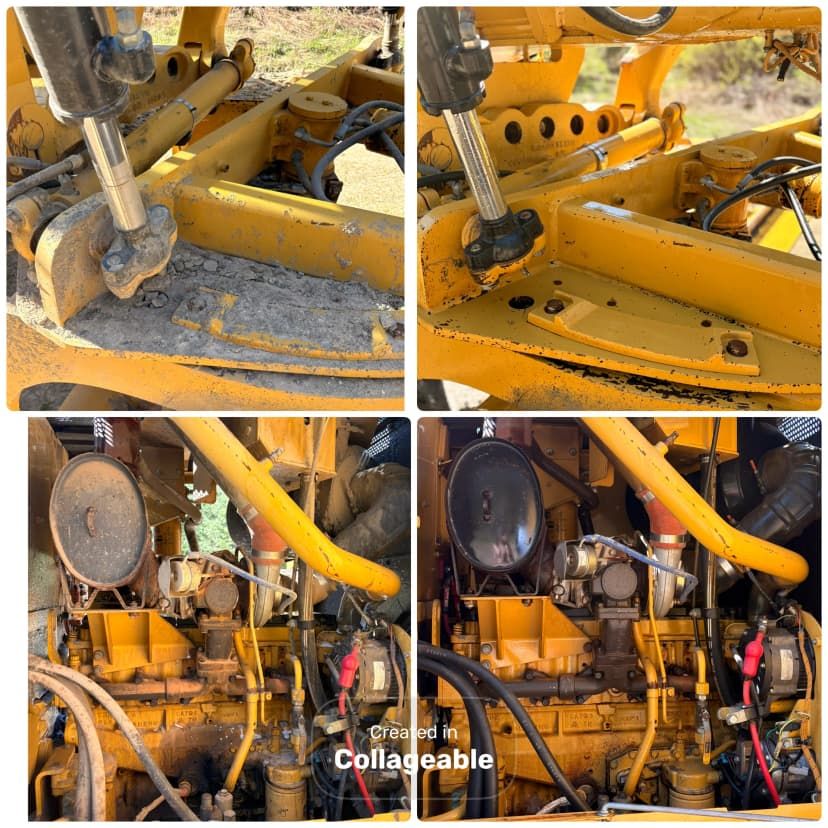
A machine packed with clay and grease hides every single thing a daily walkaround is supposed to catch, which is a problem nobody notices until it becomes an expensive one. Weeping seals, hairline cracks in a boom weld, chafed hoses, and loose pins all disappear under buildup, and they stay hidden right up until the failure happens somewhere inconvenient.
Washing is a maintenance step, not a cosmetic one. The value shows up in the fault you find on the pad instead of in a field at the far end of a job.
- Grease and clay removed from joints
- Electrical and open connections avoided
- Machines washed cool, never hot
- Known leaks identified before we start
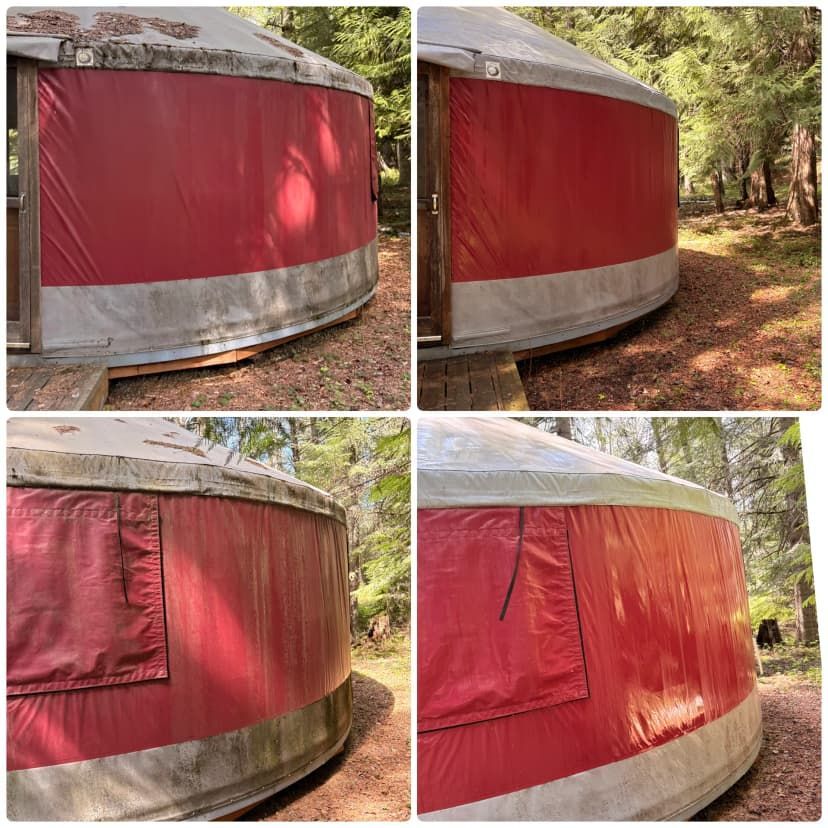
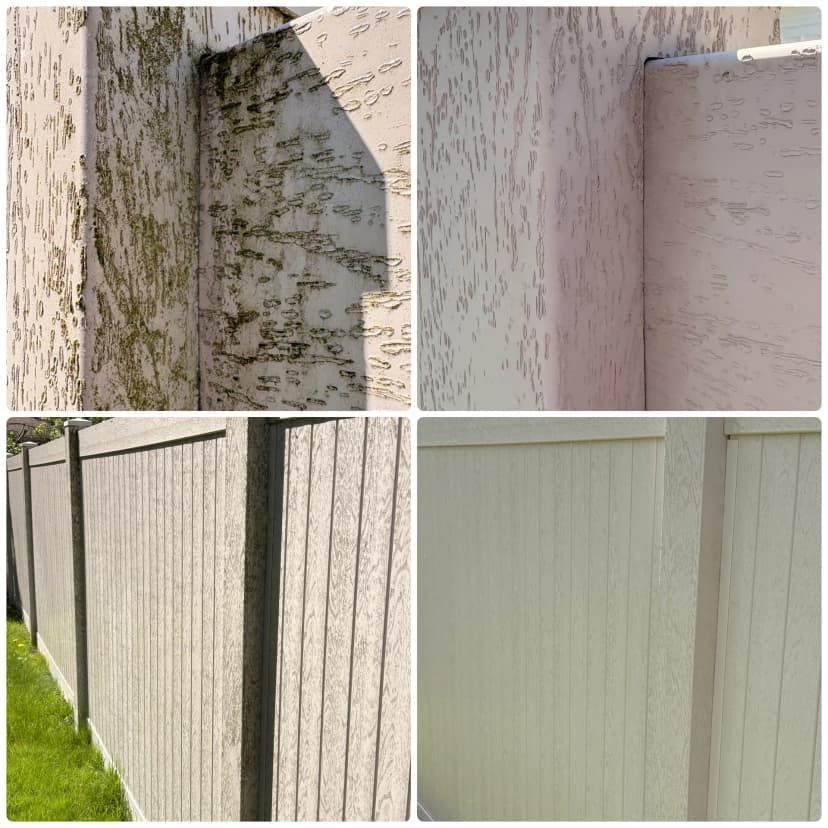
HEAVY EQUIPMENT WASHING
WHAT COMES OFF A MACHINE HAS TO GO SOMEWHERE.
Equipment wash water carries oil, grease, heavy metals, and suspended solids, which is why Post Falls holds an EPA stormwater permit requiring an ordinance against discharging equipment wash water where detergents are used. The Spokane River below the dam is already listed as impaired for lead, zinc, and phosphorus. Washing machines properly means thinking about containment and direction before the trigger is pulled, not explaining it afterward to somebody with a clipboard.
THIS VALLEY RUNS ON DIRT AND THE MACHINES THAT MOVE IT.
Construction across the Rathdrum Prairie, agricultural operations, forestry equipment, and county road fleets all work in soil that packs hard and holds. Add winter chloride from road maintenance and equipment here accumulates a mix that is both abrasive and corrosive. Machines that sit through the offseason with that on them come out in spring with rust in places that were only dirty in October.
GREASE, CLAY, AND HYDRAULIC FLUID ARE ROUTINE HERE.
Nothing on an equipment pad surprises us anymore. 8+ years of degreasing machines on yards and job sites, and the first question we ask is always where the known leaks are. We have cleaned county graders with engine bays packed solid, machines that had not been washed in a season, and rigs the owner was embarrassed to hand over. What we ask about first is where the known leaks are and what should not get wet, because that is the information nobody volunteers until it is too late. What is on your machine that we should route around?
WHY CHOOSE US FOR HEAVY EQUIPMENT WASHING.
FAULTS BECOME VISIBLE
A clean machine shows the weeping seal, the cracked weld, and the chafed hose that buildup was hiding. That is downtime avoided rather than downtime discovered at the worst moment.
RUST SLOWED DOWN
Chloride and packed soil hold moisture against steel and accelerate corrosion. Removing them, particularly before a machine sits through an offseason, protects the metal underneath directly.
RESALE AND RENTAL VALUE
Buyers, auctioneers, and rental customers form an opinion in the first 30 seconds. Presentation moves numbers on equipment far more than most owners expect it to.
SENSITIVE AREAS RESPECTED
Electrical connections, exposed wiring, breathers, and open hydraulic points get routed around deliberately. Forcing water into any of them creates a problem far larger than the dirt did.
ON YOUR SCHEDULE
Machines get washed at the yard, on the job site, or wherever they sit, seven days a week. Downtime is planned around your operation rather than around ours.
RUNOFF THOUGHT THROUGH
Where the wash water goes is part of the plan, not an afterthought. That matters on a site with drains, near water, or anywhere an inspection could turn into a conversation.
WHAT WE WASH
OUR HEAVY EQUIPMENT WORK
Machines differ enormously in what they collect and in what they cannot afford to get wet. Here is the range we handle, and how the approach shifts from one category to the next.
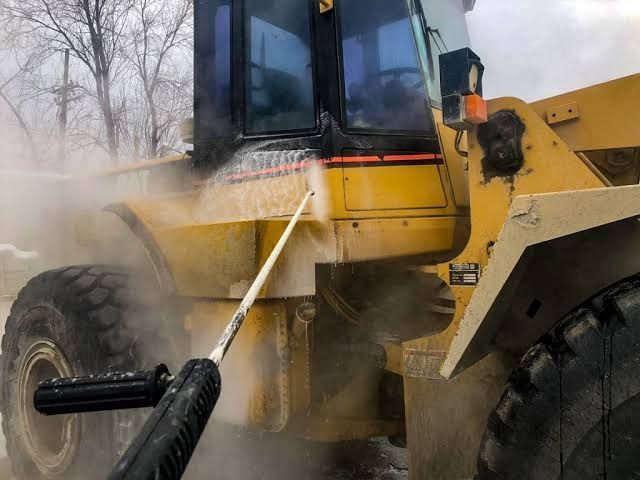
EARTHMOVING
Excavators, Dozers, and Loaders
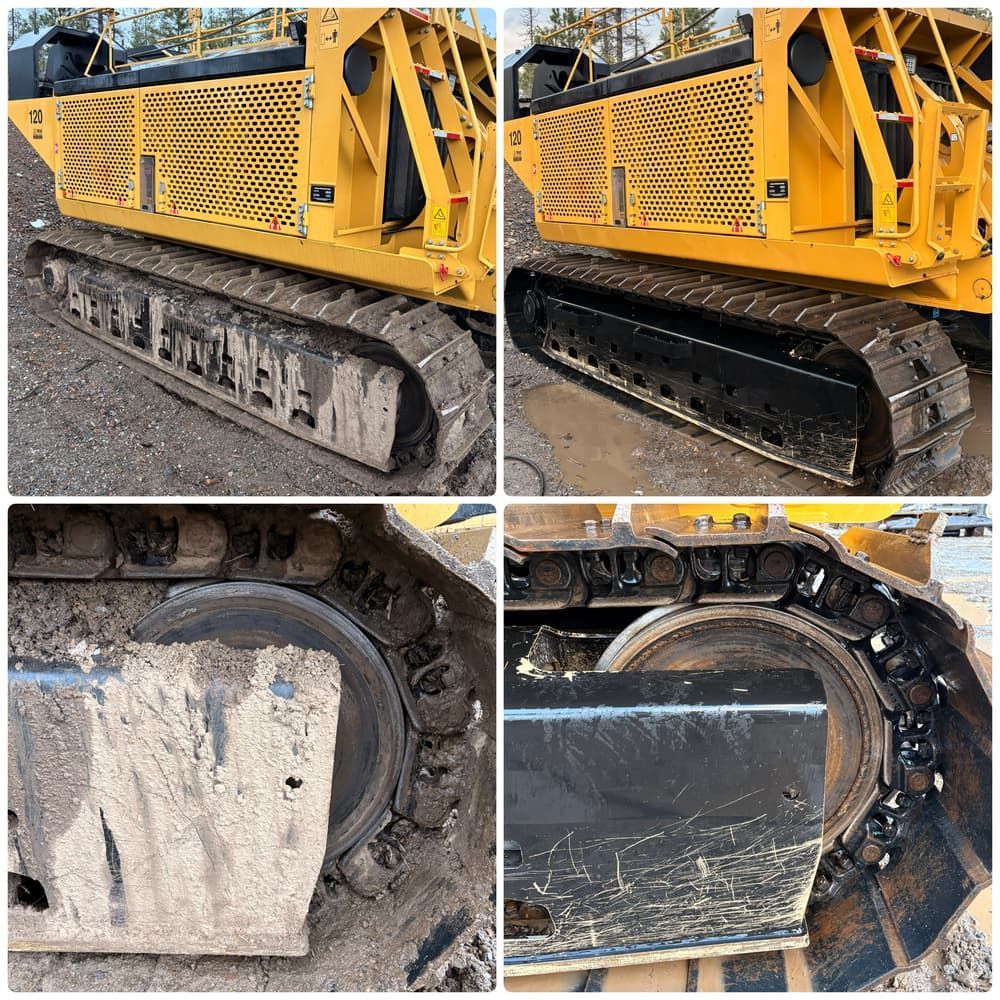
Undercarriages, tracks, booms, and buckets carry packed clay that adds real weight and hides wear. Cleaning them makes track tension, pin condition, and weld integrity visible again for a proper inspection.
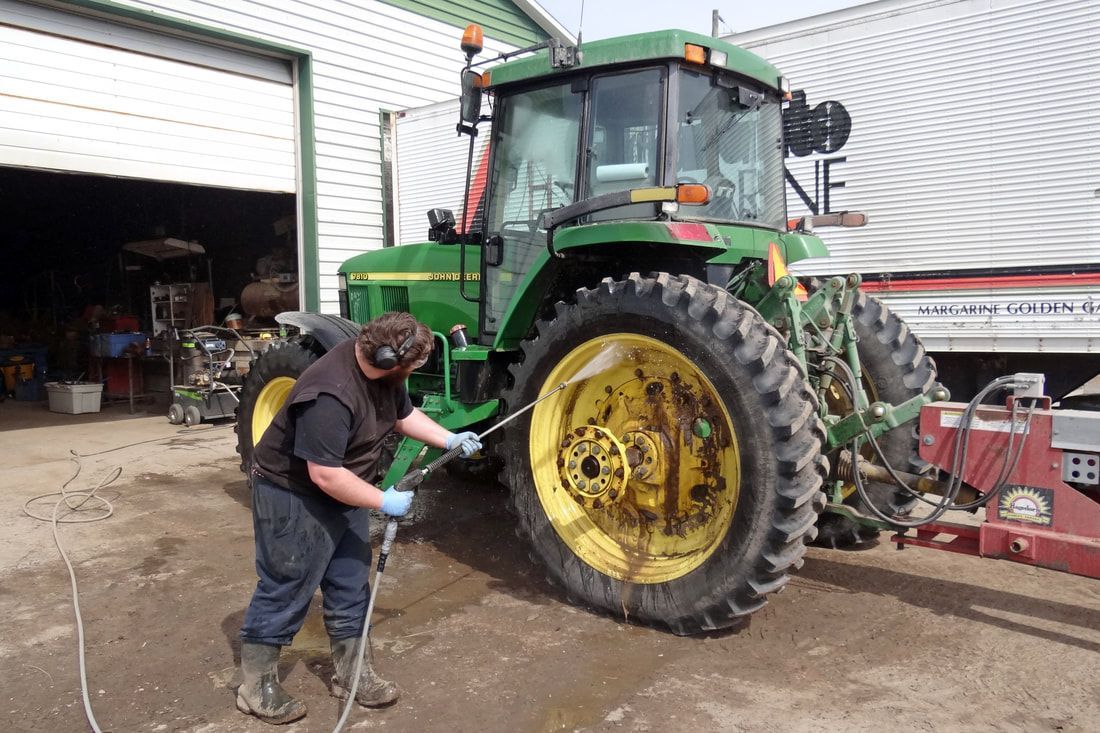
AGRICULTURAL
Tractors, Harvesters, and Implements
Crop residue, soil, and chaff pack into radiators, screens, and belt housings, where they cause overheating. Careful cleaning around those areas restores proper airflow without driving any debris further inside.
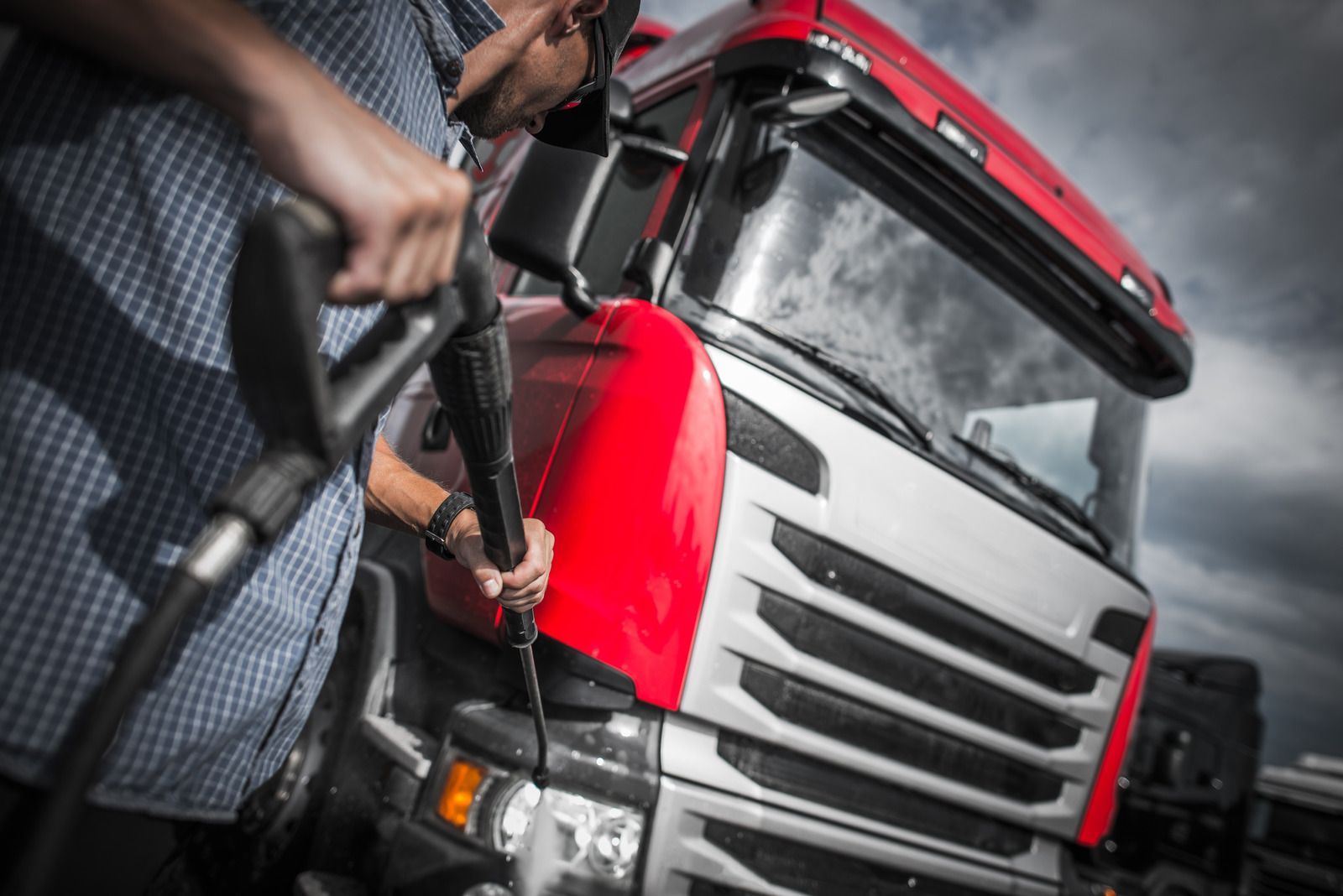
FLEET
Trucks, Trailers, and Service Vehicles
Work trucks, dump beds, flatbeds, and service bodies collect road salt and site grime that corrodes frames. Regular fleet washing protects the vehicles and puts a better face on your business.
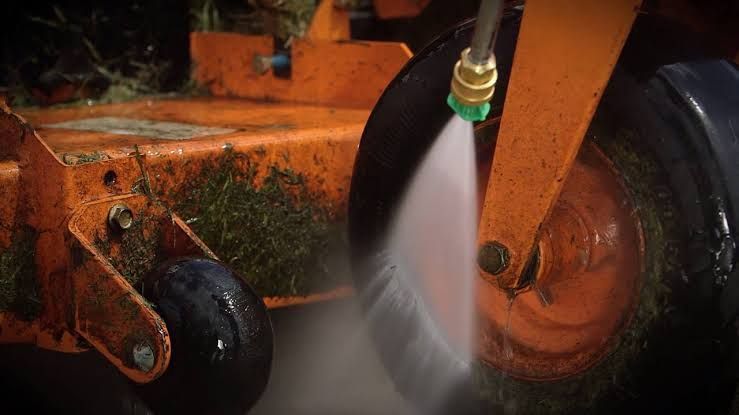
INDUSTRIAL
Plant and Yard Equipment
Forklifts, generators, compressors, conveyors, and yard machinery all accumulate a dust and oil film over time. Cleaning improves both the working environment and the accuracy of any scheduled inspection that follows.
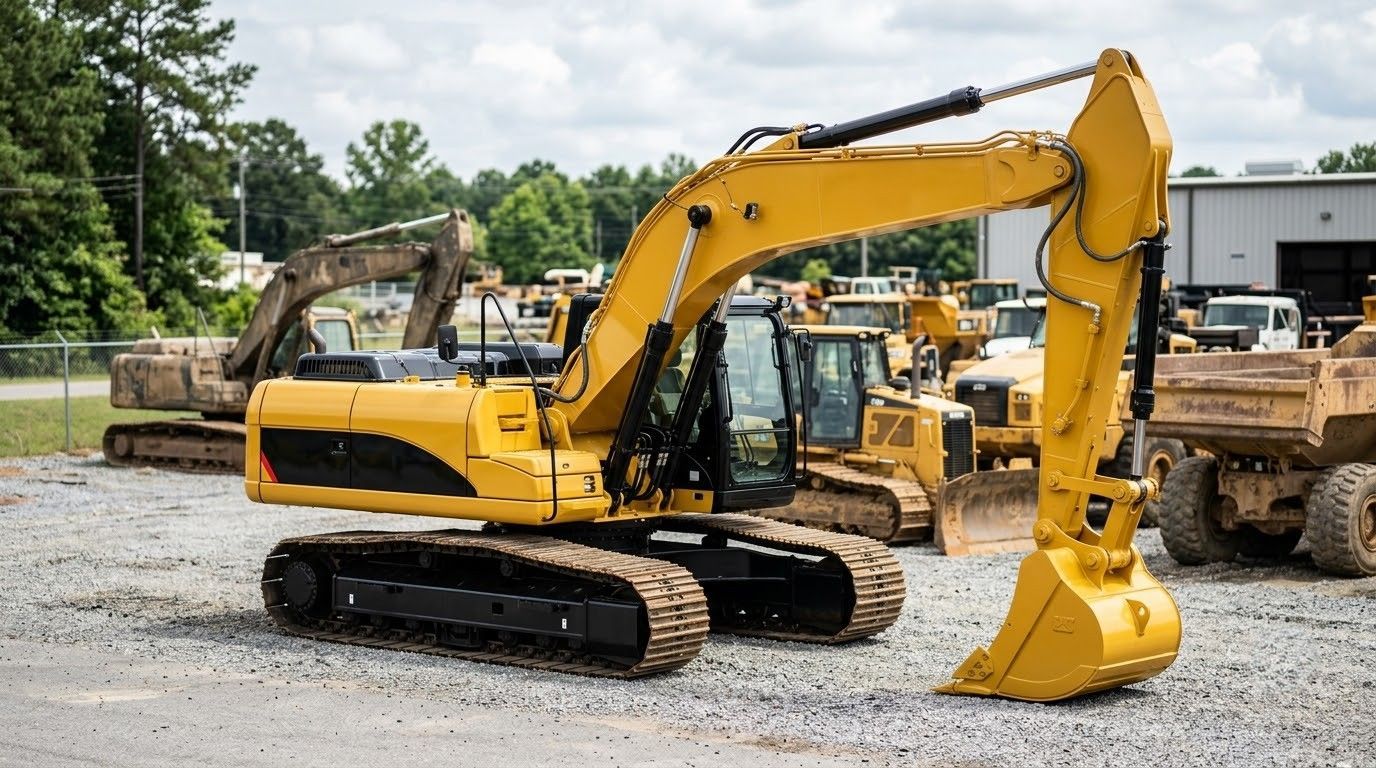
SEASONAL
Pre-Storage and Pre-Sale Cleans
A machine going into layup should not carry chloride and packed soil for six months. A machine going to auction should not arrive looking neglected. Both washes pay for themselves.
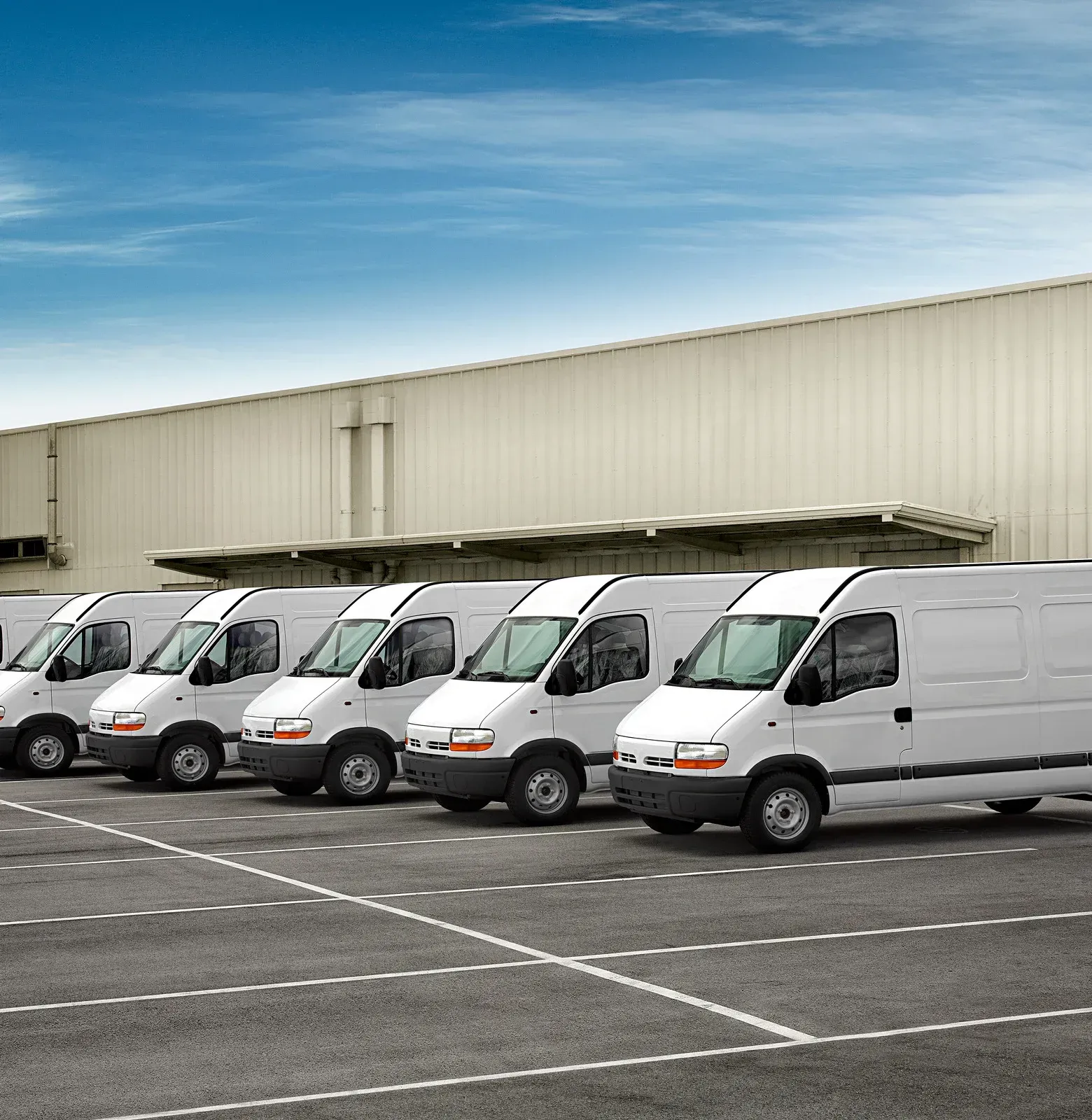
MOBILE
On-Site Fleet Service
Whole fleets get washed where they park, worked through in sequence, with minimal interruption to the working day. Scheduling is arranged around your shift changes rather than cutting into productive hours.
THE WORD ON OUR WORK
WHAT OUR CLIENTS SAY.
Equipment feedback is short and practical, which is how this industry talks. What comes up is machines coming back cleaner than expected, jobs finished when we said, and one operator finding a cracked weld on a boom the day after a wash.
Common Questions
FREQUENTLY ASKED QUESTIONS.
Equipment questions center on safety around components, on timing, and on where all the water actually ends up going. Here is what we tell yard managers and owner-operators.
What should be considered before washing heavy equipment?
Grease, hydraulic fluid, electrical components, exposed connections, and areas where water should not be forced. Equipment needs to be cool enough to clean safely, and customers should identify known leaks or sensitive components beforehand.
How often should equipment or a fleet be washed?
It depends on the work. Machines in mud or chloride want washing weekly or between jobs, while yard equipment can go monthly. Before storage and before sale are the two that always pay off.
Can you remove oil, grease, and hydraulic staining?
Most of it, using degreaser with proper dwell time rather than more pressure. Long-standing buildup in joints and under panels sometimes needs a second application, and we say so before starting.
Are your washing methods safe for all equipment surfaces?
Yes, because the method changes with the surface being cleaned. Painted panels, decals, glass, radiators, and electrical areas each get different handling, and open connections are routed around rather than sprayed directly.
Do you wash equipment on site?
That is most of our equipment work. River City Pressure Washing services yards, job sites, and storage across Post Falls, ID, provided there is water access and enough room to work around the machine.
What happens to the wash water?
It is contained and directed rather than allowed to run to a storm drain, which local stormwater rules require where detergents are involved. That planning happens before the wash, not after somebody asks.
How long does washing a machine take?
A single mid-size machine typically takes a few hours, depending on buildup and how much detail work the joints need. Fleet work is scheduled in sequence so nothing sits waiting on a wash.
Can you clean before a scheduled inspection or auction?
Those are two of our most common jobs. River City Pressure Washing schedules pre-inspection and pre-sale cleans around your deadline in Post Falls, ID, since both depend entirely on timing.
HOW WE WORK
FROM PACKED WITH CLAY TO INSPECTION READY, HERE IS HOW.
STEP 01
Walk the Machine
We go over the equipment with you, note known leaks, electrical points, breathers, damaged panels, and anything that must stay dry. Machines are confirmed cool before any water gets near them. Nothing gets sprayed on an assumption.
STEP 02
Quote and Schedule
Pricing reflects machine count, size, buildup, and location, and fleet work is scheduled around your shift pattern. Access, water supply, and runoff handling are all settled well before the day itself. No machine sits idle waiting on us.
STEP 03
Protect and Prepare
Electrical connections, open ports, and sensitive components get covered or avoided by plan rather than by luck. Runoff direction is established, and containment is arranged wherever the site or the detergent requires it.
STEP 04
Degrease and Dwell
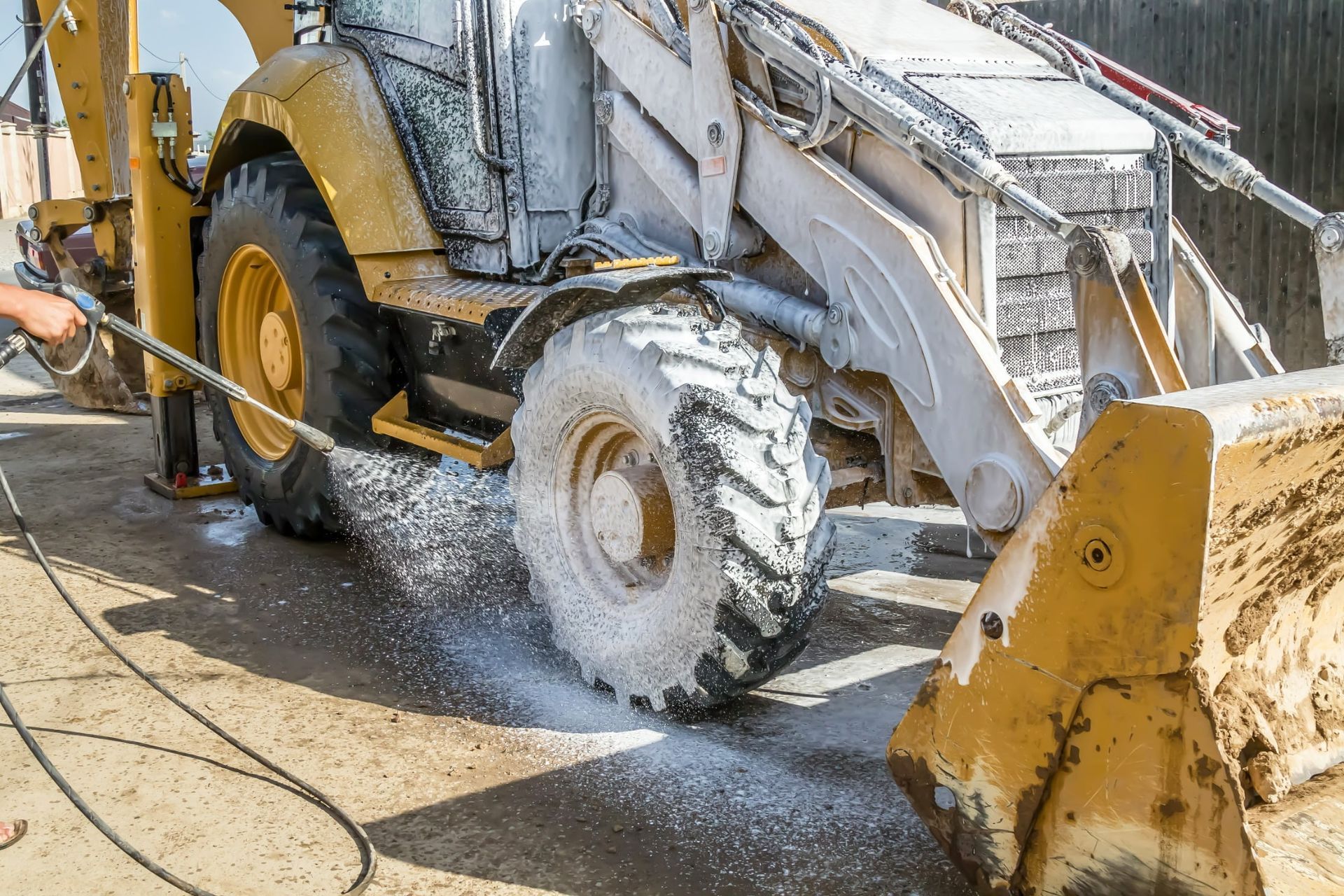
Degreaser goes onto joints, undercarriages, engine bays, and anywhere grease has packed in, then is given time to break down. This is what does the work that force alone would have to do.
STEP 05
Wash by Zone
Machines are worked section by section at the pressure suited to each surface, with panels, glass, and decals treated very differently from an undercarriage. Nothing is ever driven into a connection. Speed is never worth an electrical fault.
STEP 06
Inspect and Hand Back
The machine gets a walkaround with you, and anything that showed up once the dirt was gone is pointed out with photos. Runoff is cleared and the pad is left the way we found it.
Get Your Free Estimate
FIND OUT WHAT YOUR MACHINES ARE HIDING, FREE.
Send the equipment list and the location through the contact form and we will price it in writing, whether that is a single machine or a full fleet. Pre-storage and pre-auction work is worth booking well ahead.
WHAT YOUR EQUIPMENT QUOTE COVERS:
- Written estimate by machine or fleet
- Known leaks and sensitive points mapped first
- Degreasing with proper dwell time
- Runoff contained and directed
- Walkaround with photos of what appeared
- Our 100% satisfaction guarantee