RV Washing
RV WASHING IN Post Falls, ID
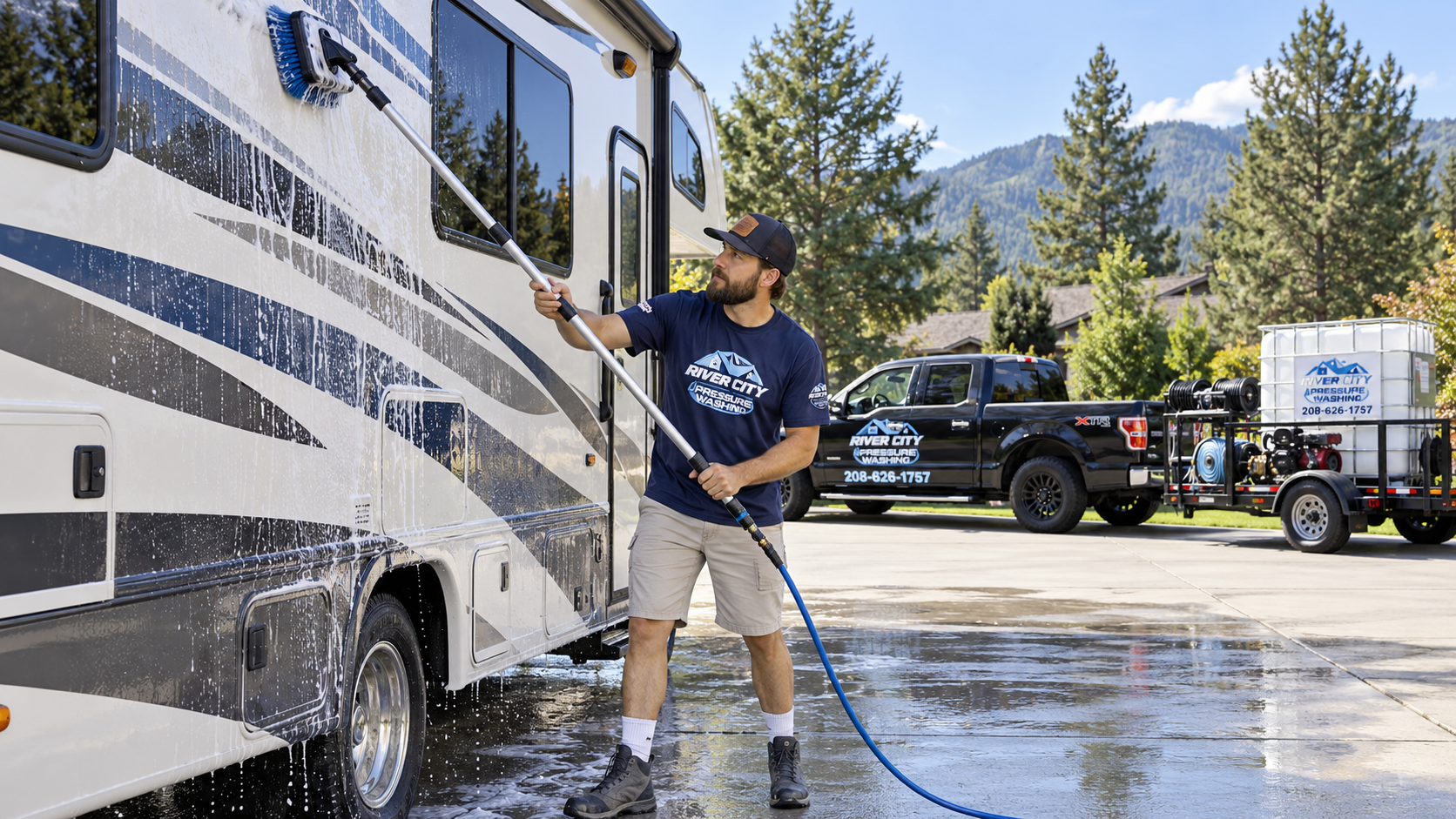
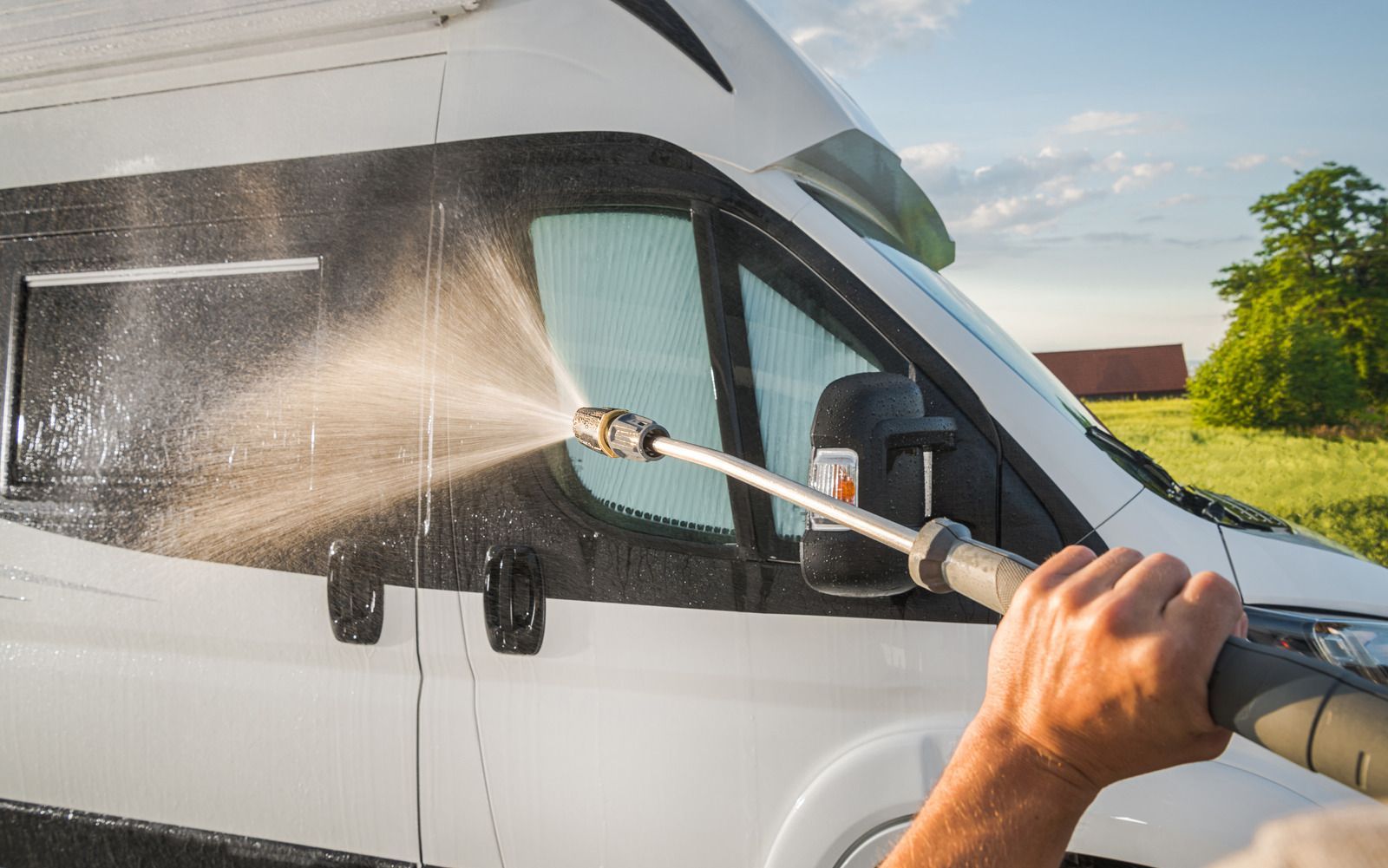
Vehicle surfaces take roughly 1,200 to 1,900 PSI with a wide fan, and an RV adds sealed roof seams, awning fabric, rubber gaskets, and vinyl decals to that equation. Every one of them is a failure point if the wand gets close. River City Pressure Washing washes motorhomes, fifth wheels, and travel trailers across Post Falls, ID using a fan wide enough to protect the seals and a detergent that will actually move black streaks.
BLACK STREAKS ARE NOT DIRT. THEY ARE RUNOFF.
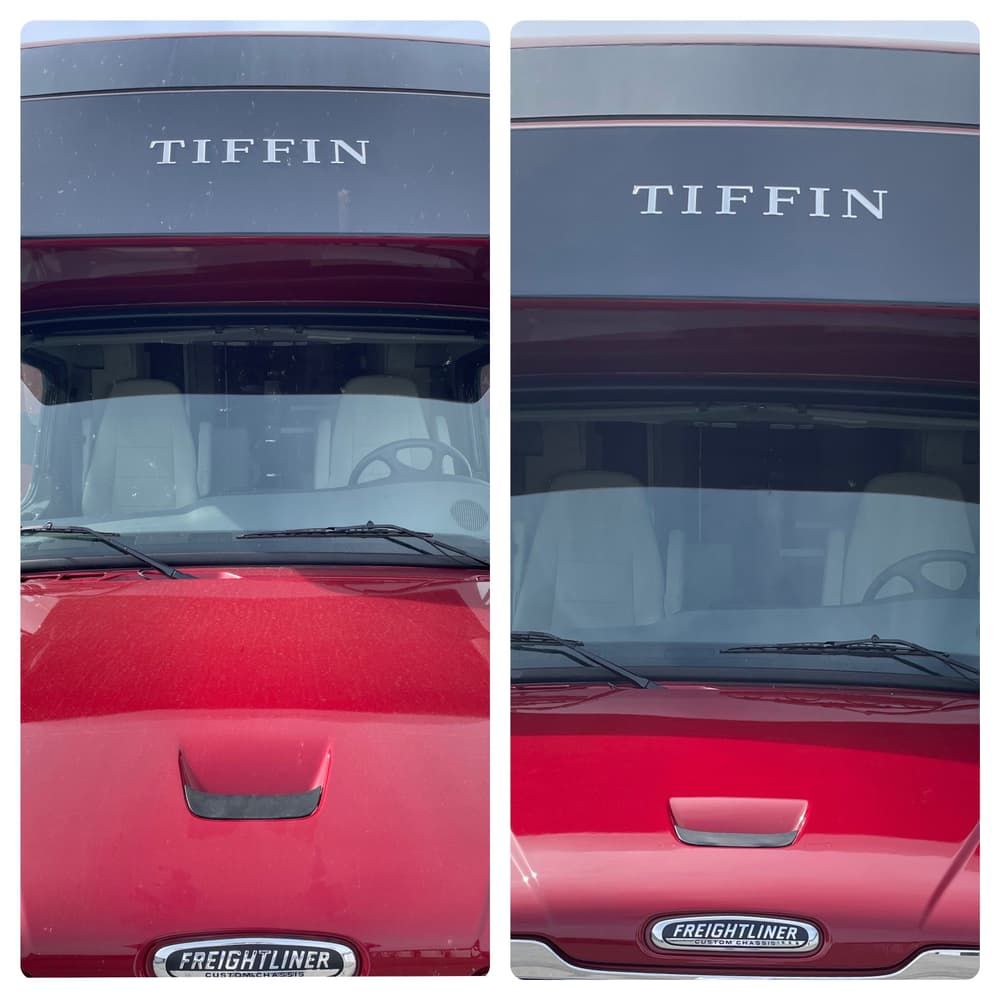
Those vertical marks under every window, vent, and roof edge are oxidized sealant and roof residue carried down the sidewall by rain, one storm at a time. They bond chemically to the finish rather than sitting on top of it, and they get worse every season, because the source above them keeps right on producing more of the same.
Rinsing does nothing at all. They need a dedicated cleaner with dwell time, worked top down, and the roof itself needs attention or the streaks return by the next storm.
- Wide fan, safe distance from seals
- Black streak treatment, not just rinsing
- Roof cleaned as part of the job
- Awnings, decals, and gaskets protected
RV WASHING
THE ROOF IS WHERE THE EXPENSIVE PROBLEMS START.
Almost nobody looks at an RV roof, which is why it is the most common source of serious damage. Sealant around vents, skylights, and air conditioning units degrades under ultraviolet light, and once it cracks, water travels inside the wall where nothing announces it until delamination shows. Cleaning the roof is the only time most owners get a proper look at those seams, and finding a failing bead early is worth more than the wash.
STORED OUTDOORS THROUGH A WET NORTH IDAHO WINTER.
Most rigs here sit from October through May, often uncovered, under trees, taking roughly 59 inches of snow and everything the melt brings with it. Algae establishes on the north-facing side, needles collect in roof channels and awning rails, and sealant contracts through every freeze cycle. By spring the sidewalls carry a season of growth that has had months to bond to the finish.
A ROOF SEAM WILL TELL ON YOU EVERY TIME.
You can read an RV's whole history from the roof. Fresh sealant over old means somebody patched rather than resealed properly. Ponding at the rear says the rig sits nose-high in storage. Needles packed into a channel mean it wintered under trees. 8+ years of washing rigs after North Idaho winters, and the roof is still where we find the problems nobody knew they had. None of that changes the wash itself, but all of it changes what we tell you afterward. Curious what yours would say?
WHY CHOOSE US FOR RV WASHING.
SEALS LEFT ALONE
A wide fan at a safe distance cleans without driving water past a gasket or lifting a sealant bead. That single decision protects the most expensive failure an RV can develop.
STREAKS ACTUALLY GONE
Dedicated treatment with dwell time removes the oxidized runoff under every window and vent. A rinse moves it around and leaves you looking at the same rig you started with.
ROOF INCLUDED
The surface nobody inspects gets cleaned and looked over. Needles come out of channels, growth comes off the membrane, and any failing seam gets pointed out with a photo.
RESALE PROTECTED
Buyers judge an RV on streaking and roof condition before anything mechanical. A rig that has been washed regularly reads as maintained, and that shows up in what people offer.
AWNINGS DONE RIGHT
Coated awning fabric smears under too little pressure and tears under too much. It gets the correct approach so the color comes back and the coating stays where it belongs.
WE COME TO IT
Rigs get washed where they are stored, at home, or on the lot, provided there is water and room to work around the full length. No moving a 35-foot trailer to get it cleaned.
WHAT WE WASH
OUR RV WASHING WORK
An RV is a vehicle, a building, and a roof structure at once, and each part needs its own handling. Here is what a full wash covers on a motorhome or a towable.
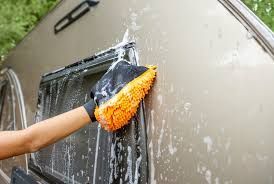
SIDEWALLS
Body and Sidewalls
Fiberglass, painted, and decaled sidewalls get washed top down with a wide fan at a safe distance. Seams, window surrounds, and trim lines are worked deliberately rather than passed over quickly.
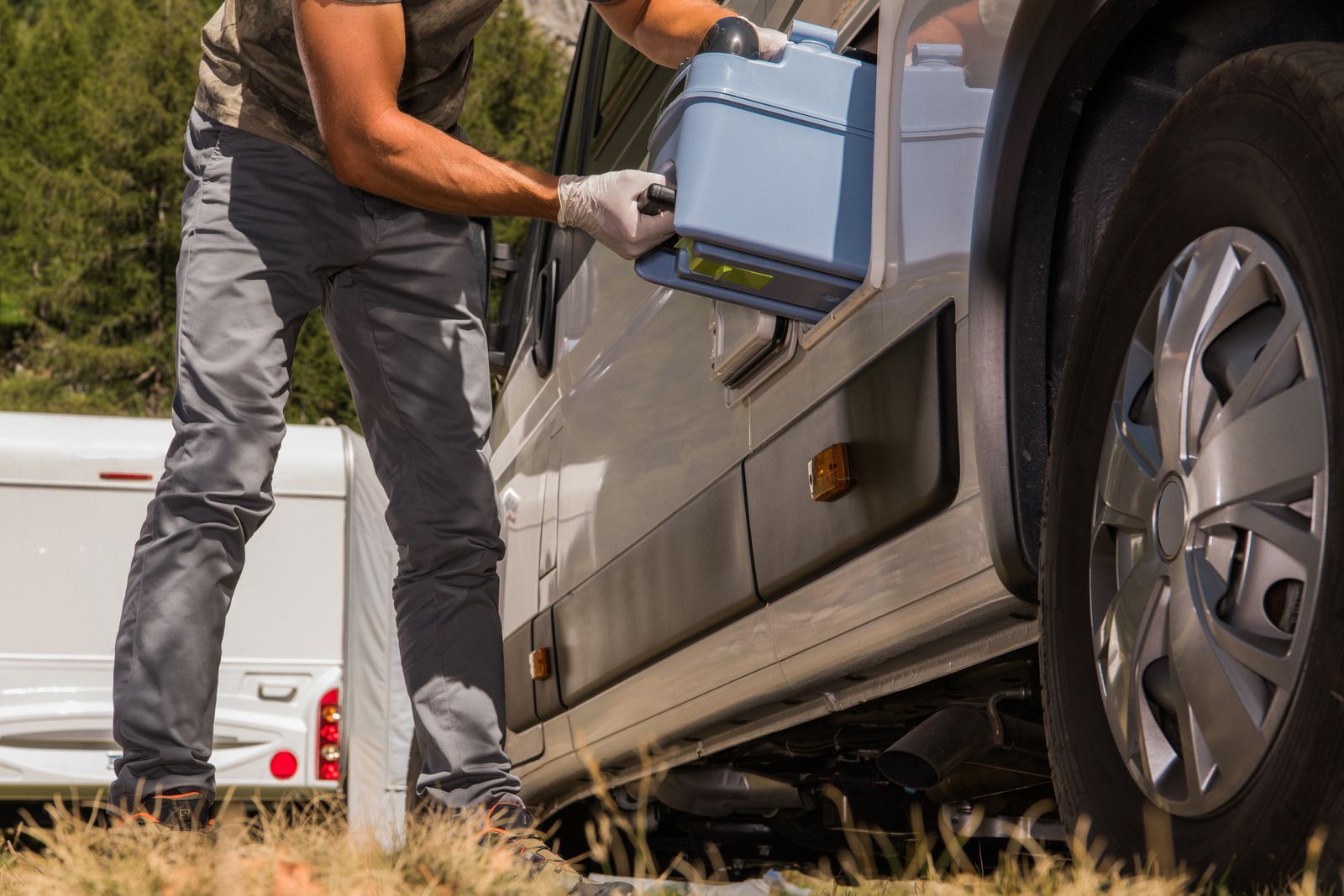
STREAKS
Black Streak Removal
Oxidized runoff under windows, vents, and the roof edge gets a dedicated cleaner and proper dwell time. Heavy accumulation may take a second application, which is included rather than upsold.
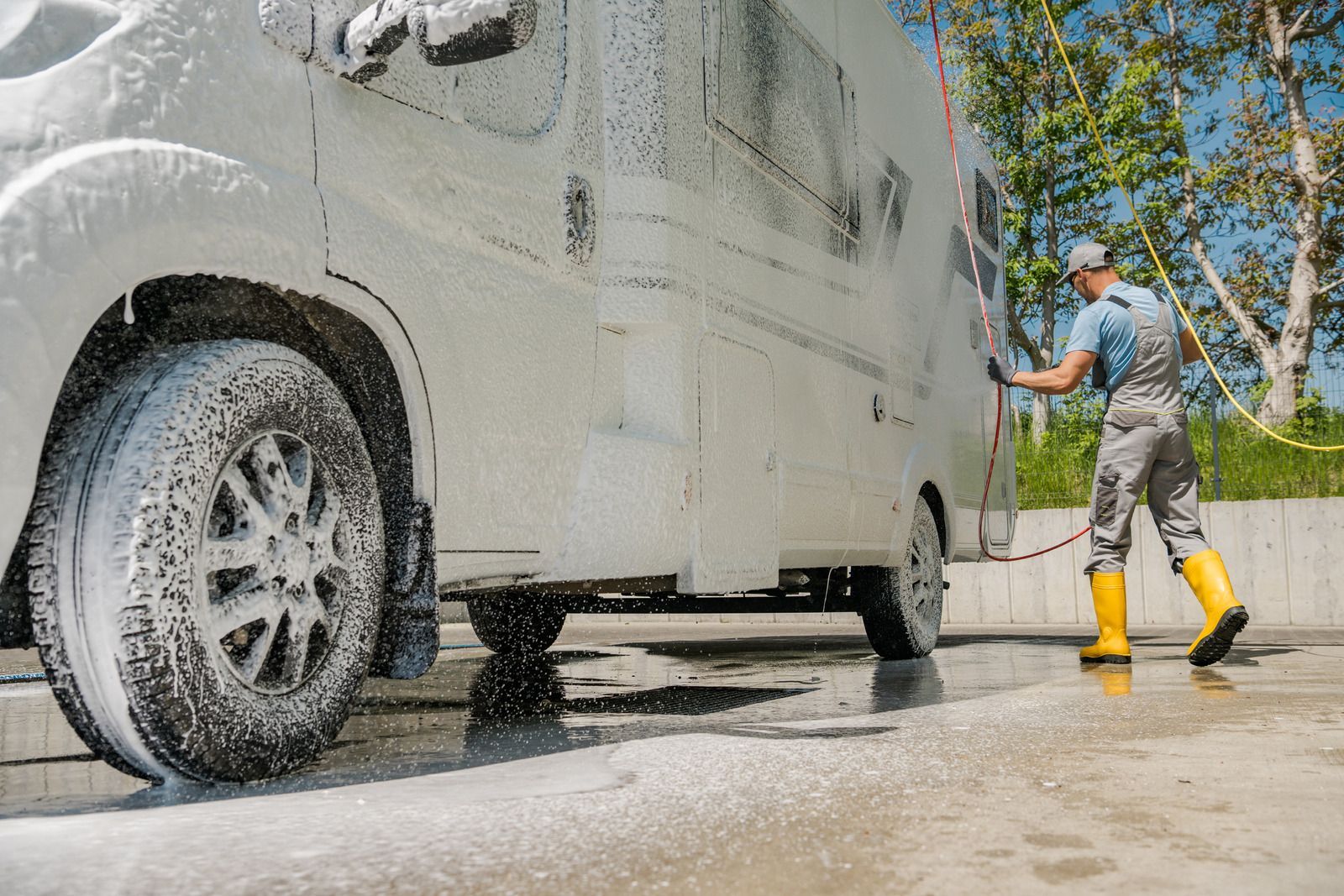
ROOF
Roof and Seam Cleaning
Membrane or fiberglass roofs get cleaned carefully, with debris cleared from channels and around vents. Sealant condition is checked while we are up there and reported back to you with photos.
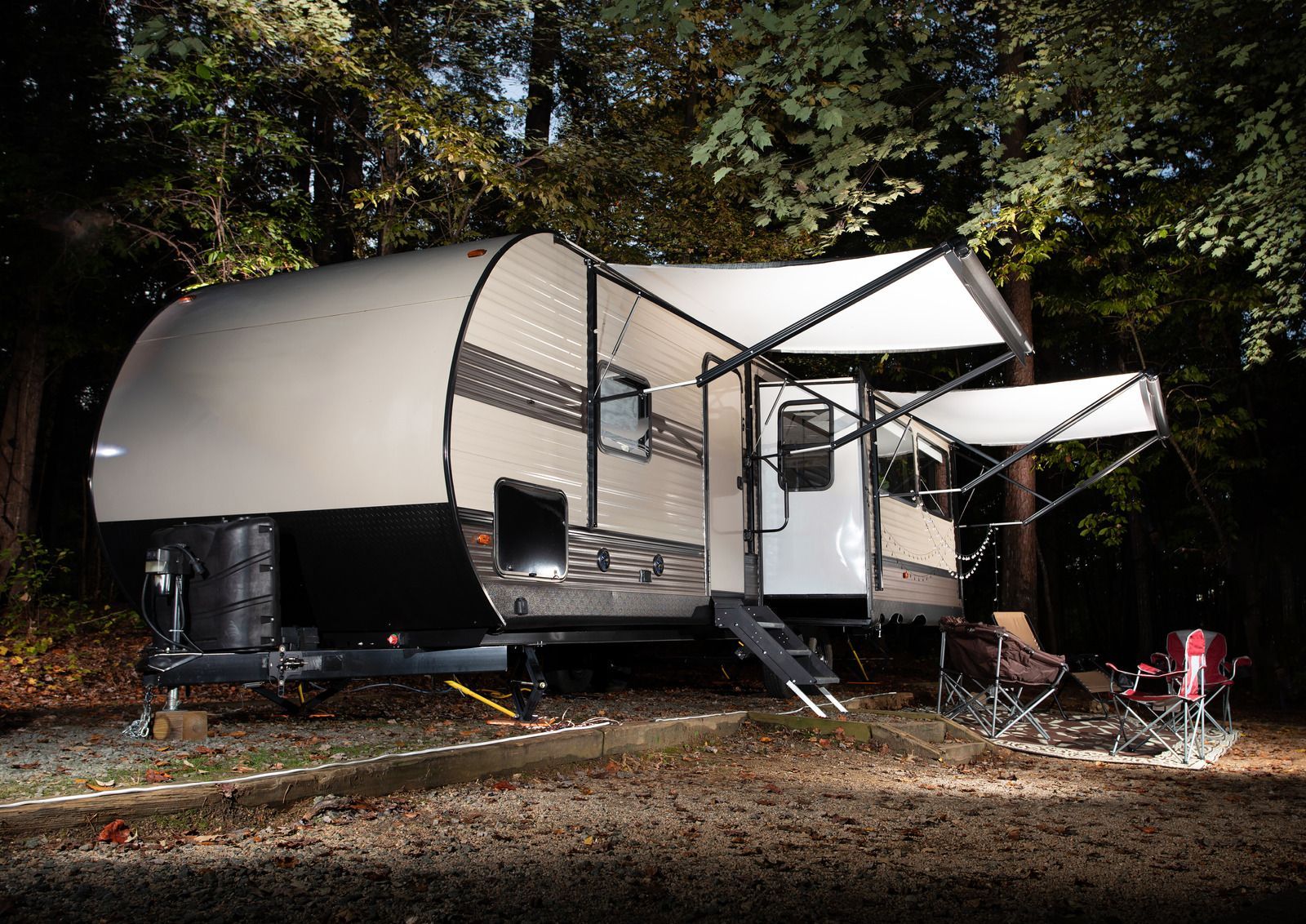
AWNINGS
Awnings and Slide Toppers
Coated awning fabric gets low pressure and the right cleaner, so growth lifts away without smearing or tearing. Awnings are cleaned fully extended and left to dry completely before being rolled back away.
UNDERSIDE
Wheels, Skirts, and Underbody
Road film, brake dust, and winter road salt all collect on wheels, skirting, and the lower panels. Cleaning them slows corrosion on exactly the components that keep the rig legal and roadworthy.
INTERIOR
Interior Refresh
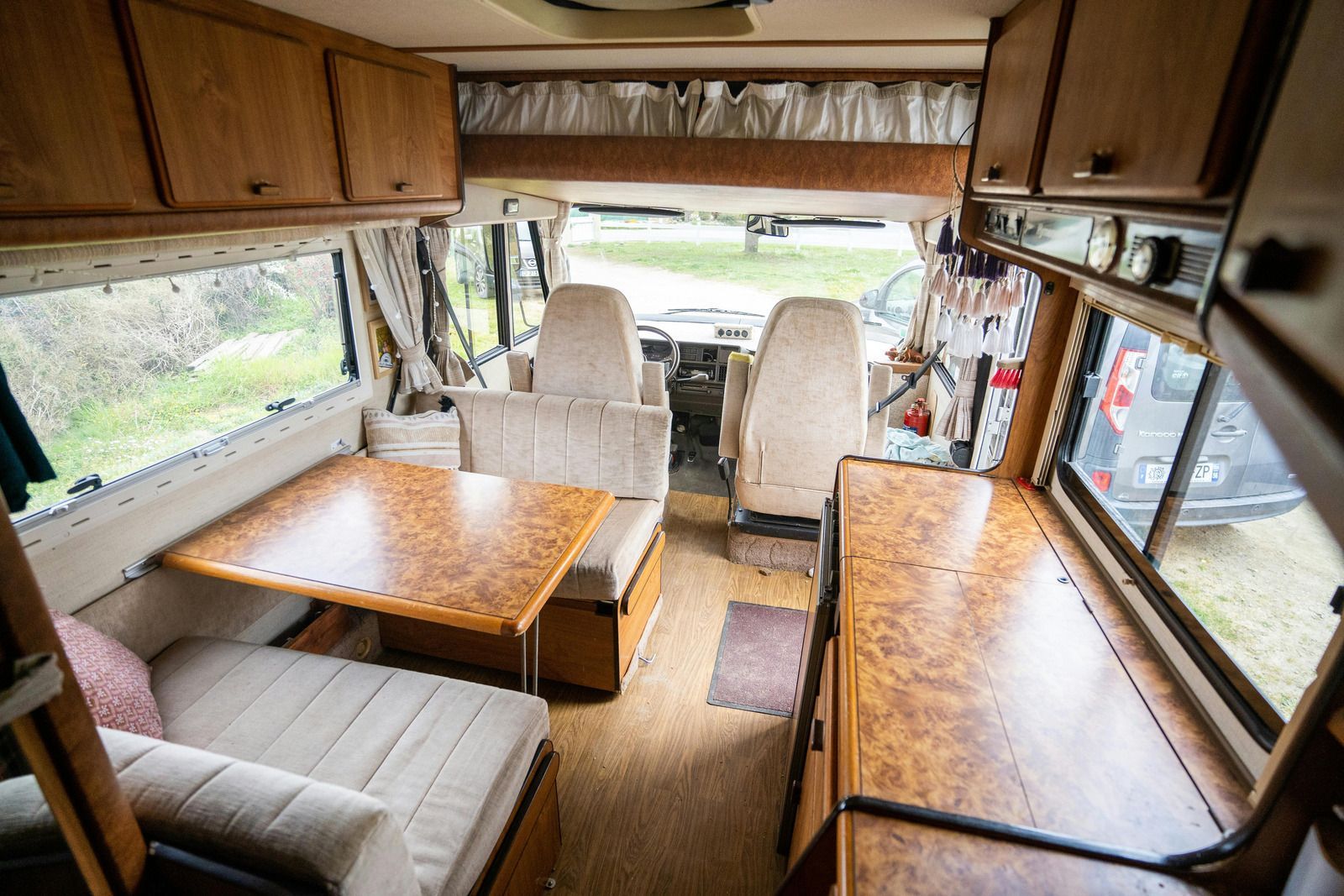
Cabins, galleys, bathrooms, and storage can be cleaned alongside the exterior, which is worth doing after a long layup. Musty interiors are almost always a moisture issue worth identifying early.
THE WORD ON OUR WORK
WHAT OUR CLIENTS SAY.
The comment we hear most often about RV work is about the streaks, because owners had assumed those marks were permanent. The second is about the roof, and about being shown a cracked seam before it turned into a wall repair.
Common Questions
FREQUENTLY ASKED QUESTIONS.
RV questions are mostly about pressure, about roofs, and about whether black streaks ever really come off. Here is what we tell owners standing beside their own rig.
Can you pressure wash an RV safely?
Yes, at vehicle-appropriate pressure with a wide fan held well back. Damage comes from a narrow tip close to a seal, a decal edge, or a sealant bead, which is precisely what careful technique avoids.
Do you clean the roof during a standard wash?
Yes, and it is the part that matters most. Debris comes out of the channels, growth comes off the membrane, and we check sealant around vents and skylights while we are up there.
What actually removes black streaks?
A dedicated cleaner given time to work, applied top down. The streaks are oxidized sealant runoff bonded to the sidewall, so a rinse or a general detergent will not shift them at all.
How many times a year does an RV need washing?
Twice a year suits most rigs stored outdoors, once before the season and once before layup. River City Pressure Washing handles a lot of spring washes across Post Falls, ID after a wet winter.
Is it safe to wash over RV decals and lettering?
Not with the correct distance and fan. Decal edges are the vulnerable point, so they get worked carefully, and any existing lifting or peeling gets pointed out before we start rather than after.
Can you wash it where it is stored?
Usually. River City Pressure Washing works at homes, driveways, and storage lots around Post Falls, ID, as long as there is water access and enough clearance to reach the full length safely.
Is a pre-storage wash worth doing?
Yes, and it is the more valuable of the two washes. Growth and road film left to sit for seven months bond hard to the finish and are considerably more work to remove in spring.
Do you clean the awnings too?
Awnings are included when you want them. They get extended, cleaned at low pressure with a cleaner suited to coated fabric, and left to dry completely before being rolled back in.
HOW WE WORK
FROM A WINTER OF STREAKS TO ROAD READY, HERE IS HOW.
STEP 01
Inspect the Rig
We walk the full length, check decals, seals, gaskets, awning fabric, and existing damage, and get up on the roof to see what condition the membrane and sealant are in before anything else.
STEP 02
Quote by Length
Your written price covers length, condition, and whether roof, awnings, and interior are included. Anything that will not fully clean up, and any seam that needs attention, is named beforehand. You approve the full scope before we start.
STEP 03
Prepare and Protect
Vents, hatches, and windows get closed, awnings are positioned, and the work area is arranged so that runoff can be controlled properly. Electrical connections and open storage compartments are all checked and secured first.
STEP 04
Roof Down
The roof is cleaned first so everything coming off it runs down onto sidewalls that have not been finished yet. Channels get cleared and sealant is photographed while we have the access. Working in the other order wastes half the wash.
STEP 05
Treat and Wash
Black streak treatment goes on and is left to dwell, then the sidewalls are washed with a wide fan at a safe distance. Awnings, wheels, skirting, and the underbody all follow in sequence.
STEP 06
Dry and Report
Surfaces are dried down, awnings are left open until fully dry, and we walk the rig with you. You get photos of anything on the roof worth watching before your next trip. You decide what needs attention before you travel.
Get Your Free Estimate
GET THE RIG READY BEFORE THE SEASON STARTS, FREE.
Tell us the length, the type, and where it is stored through the contact form and we will price the wash, roof, and awnings in writing. Spring slots go quickly once the weather turns.
WHAT YOUR RV WASH COVERS:
- Written estimate by length and type
- Wide fan at a seal-safe distance
- Black streak treatment with dwell time
- Roof cleaned and sealant photographed
- Awnings, wheels, and skirting included
- Our 100% satisfaction guarantee